
Eska 522022 Fuse 5x20 mm T 3,15 A
Installation > Securing material > Fuses and Holders
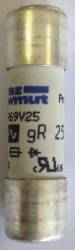
Eska 522022 Fuse 5x20 mm T 3,15 A
| Lieske Part No. | 724932 |
|---|---|
| Mfg Part No | 522022 |
| EAN-Code | 4260634690824 |
| Manufacturer | Eska |
| Here only | 1,84 EUR
2,19 EUR incl. VAT
|
Further information for Eska 522022 Fuse 5x20 mm T 3,15 A
| General | |
| Fuse type | Miniature fuse |
| Model | slow-acting |
| Nominal current | 3,15 A |
| Nominal voltage | 250 V |
| Norm | DIN 41571-3 |
| Marking | T |
Fuse is the general term for small, precise fuses used in electrical circuits for protective functions. The time-lag design means that the fuse does not immediately respond to short-term current overloads, but can tolerate a certain amount of time, to avoid interfering with the operation of devices with high inrush currents. The standard DIN 41571-3 defines the technical requirements for these fuse types, including dimensions, marking, and electrical characteristics.
Applications include primarily protective functions in electrical systems, such as in lighting installations, small consumer circuits, or in electrical installations in residential and commercial buildings. The fuse is suitable for use in switchgear cabinets, distribution boards, or other electrical distribution units where precise current limitation is required. The dimensions of 5xron 20 mm correspond to the standard format for fuses, which is used in many fuse holders and switches.
Functions and equipment in detail include precise marking of the rated values: 3.15 A as nominal current and 250 V as nominal voltage. The marking “T” indicates the time-lag design, meaning the fuse does not disconnect immediately during short-term current surges. The fuse is suitable for use in alternating and direct current systems, with the nominal voltage of 250 V indicating the maximum voltage at which the fuse operates safely.
Technology explained simply shows that the time-lag fuse is a special design where the fusible material has higher thermal conductivity and a longer response time. This prevents the fuse from disconnecting unnecessarily during short-term, high current surges, such as those occurring during the start-up of motors or transformers. The fuse is dimensioned to safely disconnect in case of prolonged overload of the nominal current or short circuit, to protect the electrical system.
Compatibility and accessories refers to use in standard fuse holders that support the 5x20 mm format. The fuse is designed for use in switchgear cabinets and distributors equipped with appropriate holders.
Mounting and installation is done by inserting the fuse into a suitable holder mounted in a switchgear cabinet or distributor. The fuse is inserted into the holder, connecting the fuse contacts with the contacts of the holder mechanism. Mounting requires no special tools, as the fuse is inserted into the holder by mechanical pressure. Installation is carried out according to applicable electrical installation regulations, including testing of circuits and fuse function after installation.
Advantages in operation lie in precise disconnection during prolonged overloads and short circuits, while tolerating short-term current surges. This protects connected devices and prevents unnecessary disconnections. The fuse is easy to identify and replace, as it is standardized and used in many installations. Compliance with standard DIN 41571-3 ensures uniform quality and reliability.

This is an offer of:
79279 Vörstetten
https://industry-electronics.com
Tel. 07666/88499-0
Fax. 07666/88499-111
Diesen Artikel finden Sie unter:
industry-electronics.com/artikel/724932

Lieske Elektronik e.K.
Reutener Str. 1079279 Vörstetten
https://industry-electronics.com
Tel. 07666/88499-0
Fax. 07666/88499-111
Diesen Artikel finden Sie unter:
industry-electronics.com/artikel/724932