
Epson C32C823891 Label Printer Parallel
Printers/Scanners > Printers > Label Printers
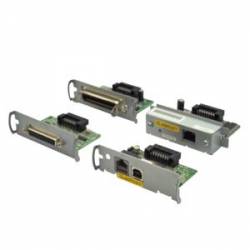
Epson C32C823891 Label Printer Parallel
| Lieske Part No. | 151374 |
|---|---|
| Mfg Part No | C32C823891 |
| EAN-Code | |
| Manufacturer | Epson |
| Here only | 35,06 EUR
41,72 EUR incl. VAT
|
Further information for Epson C32C823891 Label Printer Parallel
| Design | |
| Country of origin | China |
| Internal | |
| Logistics data | |
| Harmonized System (HS) code | 84733020 |
| Products per pallet | 2400 pc(s) |
| Products per pallet layer | 120 pc(s) |
| Other features | |
| Compatibility | -TM-H5000II -TM-H6000III -TM-J2100/TM-J2000 -TM-J7100/TM-J7000 -TM-J7600/TM-J7500 -TM-L60II -TM-L90 -TM-T88IV -TM-T90 -TM-U220 -TM-U230 -TM-U295 -TM-U590 -TM-U675 -TM-U950 |
| Packaging data | |
| Quantity per pack | 1 pc(s) |
| Package width | 80 mm |
| Package depth | 100 mm |
| Package height | 35 mm |
| Ports & interfaces | |
| Host interface | Parallel |
| Output interface | Parallel |
Applications
This interface board is primarily used in environments where label printers must be connected to a host system via a parallel interface. This includes industrial applications such as logistics, retail, and manufacturing, where parallel interfaces are still used due to their reliability and simplicity. The board enables direct connection without additional adapters or converters, simplifying installation and enhancing system stability. It is not intended for use in printers equipped with other interfaces such as USB or Ethernet.
Functions and Features in Detail
The UB-P02II features a host interface and an output interface, both conforming to the parallel standard. These interfaces enable bidirectional data transmission between the printer and the connected device, with data transfer occurring over a parallel cable. The use of parallel interfaces remains common in certain industries, particularly in older or specialized systems based on this technology. The board is designed as a replacement part to restore functionality in case of defects or during printer modifications.
Technology Explained Simply
A parallel interface board like the UB-P02II transmits data bit by bit in parallel, meaning simultaneously over multiple lines. This distinguishes it from serial interfaces, where data is transmitted sequentially. Parallel transmission can offer higher data transfer rates in certain scenarios, especially in older systems that lack modern interfaces such as USB or Ethernet. The board is integrated into the printer’s hardware and is not operated as an external device. It does not support power over Ethernet (PoE) or other modern technologies, as it is designed for use in specific, existing systems.
Compatibility and Accessories
The interface board is compatible exclusively with the Epson printers listed in the supported models. It is not a universal module but specifically tailored to the hardware architecture of these printers. Compatibility includes both older and newer models from the TM and TM-J series that support a parallel interface. The board is used solely as a replacement or exchange interface within the specified printer models.
Installation and Mounting
Installation of the UB-P02II involves replacing the existing interface board inside the printer. This typically requires access to the internal components of the device, with the exact procedure depending on the specific printer brand and model. Installation should be carried out by a person with appropriate technical knowledge to avoid damaging the device. Connection is made via the parallel interface, ensuring correct pin assignment.
Operational Advantages
The use of the UB-P02II allows restoration of functionality for a printer with a defective parallel interface. It provides a cost-effective alternative to replacing the entire printer, especially in environments where parallel interfaces are still in use. Compatibility with a wide range of models increases flexibility during maintenance and repair. Since the board is already included in most parallel Epson printers, it is typically only required when replacement or repair is necessary. It is not a standalone device but an integrated module installed within the existing printer hardware.

This is an offer of:
79279 Vörstetten
https://industry-electronics.com
Tel. 07666/88499-0
Fax. 07666/88499-111
Diesen Artikel finden Sie unter:
industry-electronics.com/artikel/151374

Lieske Elektronik e.K.
Reutener Str. 1079279 Vörstetten
https://industry-electronics.com
Tel. 07666/88499-0
Fax. 07666/88499-111
Diesen Artikel finden Sie unter:
industry-electronics.com/artikel/151374