
Moeller 285604 PFR-W-210 converter for RCD relay
Industrial Material > Control devices / Pilot devices > Breakers and disconnectors
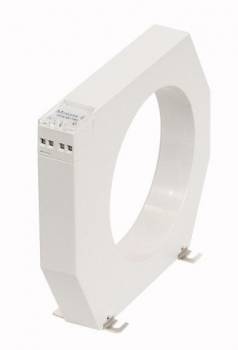
Moeller 285604 PFR-W-210 converter for RCD relay
| Lieske Part No. | 327628 |
|---|---|
| Mfg Part No | 285604 |
| EAN-Code | 4015082856045 |
| Manufacturer | Eaton |
| Here only | 1.102,82 EUR
1.312,36 EUR incl. VAT
|
Further information for Moeller 285604 PFR-W-210 converter for RCD relay
| General | |
| Diameter | 210 mm |
| Mounting method | Screw mounting |
| Alternative mounting | mounting clip for DIN rail mounting |
| Utilization | for circuit breaker series NZM |
| Compatibility | NZM1, NZM1-4, N1, N1-4, NZM2, NZM2-4, N2, N2-4, NZM3, NZM3-4, N3, N3-4, NZM4, NZM4-4, N4-4 |
| Approval | not UL/CSA-approved |
| Technical guideline | transformer diameter must be 1.5 times larger than the sheath diameter of the conductor being passed through |
Applications
The transformer is suitable for a wide range of circuit breaker types from the NZM series, including models such as NZM1, NZM1-4, N1, N1-4, NZM2, NZM2-4, N2, N2-4, NZM3, NZM3-4, N3, N3-4, NZM4, NZM4-4, and N4-4. It is used in installations where precise current measurement and fault current detection are necessary, for example in production plants, machine controls, or building electrical systems. The modular design allows flexible adaptation to different requirements and switching configurations.
Functions and Equipment in Detail
The transformer features a diameter of 210 mm, designed for passing conductors through. It is equipped with a screw mounting, ensuring secure attachment to circuit breakers. Alternatively, a mounting clip for DIN rail mounting is available, simplifying installation in enclosures. The modular function group allows easy and flexible mounting without requiring additional tools or special mounting procedures.
Technology Explained Simply
The transformer operates on the principle of a current transformer, where the primary current (conductor passed through) generates a magnetic flux in the core of the transformer, which is then converted into a smaller secondary current. This secondary current is transmitted to the RCD relay for evaluation. The recommendation for selecting the diameter is that the transformer’s diameter should be 1.5 times larger than the outer diameter of the conductor being passed through. This ensures optimal measurement accuracy and avoids errors due to insufficient coverage of the conductor. The transformer is not intended for use in UL/CSA-approved installations.
Compatibility and Accessories
The transformer is specifically developed for the NZM circuit breaker series and can be combined with various models of this series, as listed in the compatible circuit breakers. Compatibility includes both 3-pole and 4-pole models with different rated currents. The listed circuit breaker models are specified as compatible combinations, but no specific connection to particular RCD relay models is mentioned.
Mounting and Installation
Mounting is done either via the integrated screw mounting or using the optional mounting clip for DIN rail. Installation requires passing the conductor to be monitored through the transformer. It is essential to ensure that the conductor is fully inside the transformer and that the recommended diameter clearance is maintained. Mounting is simple and does not require special tools. The modular construction allows for quick integration into existing switching installations.
Advantages in Operation
Using the transformer enables precise and reliable current measurement, which is essential for the function of RCD relays. The modular design and flexible mounting options increase adaptability to different installation configurations. Use in combination with NZM circuit breakers ensures compatible and standardized integration into existing switching installations. Adhering to the technical guidelines for selecting the diameter ensures optimal measurement accuracy and prevents false alarms or malfunctions.

This is an offer of:
79279 Vörstetten
https://industry-electronics.com
Tel. 07666/88499-0
Fax. 07666/88499-111
Diesen Artikel finden Sie unter:
industry-electronics.com/artikel/327628

Lieske Elektronik e.K.
Reutener Str. 1079279 Vörstetten
https://industry-electronics.com
Tel. 07666/88499-0
Fax. 07666/88499-111
Diesen Artikel finden Sie unter:
industry-electronics.com/artikel/327628