
Moeller 260015 NZM1-XKC frame terminal 3p
Industrial Material > Control devices / Pilot devices > Breakers and disconnectors
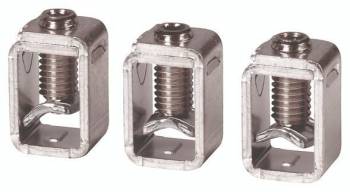
Moeller 260015 NZM1-XKC frame terminal 3p
| Lieske Part No. | 252247 |
|---|---|
| Mfg Part No | 260015 |
| EAN-Code | 4015082600150 |
| Manufacturer | Eaton |
| Here only | 24,78 EUR
29,49 EUR incl. VAT
|
Further information for Moeller 260015 NZM1-XKC frame terminal 3p
| Features | |
| Number of poles | 3P |
| Product colour | Metallic |
| Rated current | 160 A |
Applications
The conversion kit NZM1-XKC is intended for use with circuit breakers of the NZM1(-4), PN1(-4), and N(N/O)1(-4) series. It is particularly used when converting a screw-connected circuit breaker to a standard connection, which is standard on all NZM1-, PN1-, and N(S)1-type switches. The application takes place within the switchgear housing, ensuring a compact and secure installation. The terminal is designed for worldwide use and thus supports a wide range of application scenarios across various industries.
Functions and Equipment in Detail
The product includes parts suitable for mounting on 3- or 4-pole switches. The terminal enables the connection of flexible and highly flexible conductors, with the use of wire end ferrules recommended. The maximum permissible conductor cross-section can only be connected if the conductor is flexible and no wire end ferrules are used. This ensures a safe and reliable connection that meets the requirements of industrial environments. The modular construction of the functional groups ensures easy handling and installation.
Technology Explained Simply
The frame terminal NZM1-XKC is a mechanical component installed within the switchgear housing to ensure the electrical connection between the circuit breaker and the connected conductors. The terminal is rated for a nominal current of 160 A, meaning it can safely transmit this current value continuously without causing thermal overload or mechanical damage. The metallic surface indicates high mechanical strength and corrosion resistance, which is important for use in industrial environments. The modular design allows for flexible adaptation to various switch models within the NZM series.
Compatibility and Accessories
The conversion kit is specifically developed for circuit breaker series NZM1(-4), PN1(-4), and N(N/O)1(-4). It is intended as a replacement for screw connections and enables conversion to the standard connection, which is standard on the mentioned switch types. Combination with other accessories from the NZM series is possible, although exact compatibility depends on the specific switch configuration. The use of flexible conductors and wire end ferrules is recommended to ensure optimal electrical connection.
Installation and Mounting
Mounting takes place within the switchgear housing, where the modular functional groups allow for simple and flexible installation. The terminal is integrated into the switch, with connections to the conductors made at the designated connection points. The use of wire end ferrules with flexible and highly flexible conductors is recommended to ensure a safe and reliable connection. The maximum permissible conductor cross-section can only be connected if the conductor is flexible and no wire end ferrules are used. Installation requires no special tools or additional components, as the terminal is designed as a conversion kit.
Operational Advantages
The use of the conversion kit NZM1-XKC provides a flexible and reliable solution for adapting circuit breakers to modern requirements. The modular design enables easy installation and maintenance, while the metallic surface and high current-carrying capacity of 160 A ensure robust and long-lasting operation. Compatibility with various switch models in the NZM series increases flexibility in planning and implementing electrical installations. The use of flexible conductors and wire end ferrules ensures a safe electrical connection that meets the requirements of industrial environments.

This is an offer of:
79279 Vörstetten
https://industry-electronics.com
Tel. 07666/88499-0
Fax. 07666/88499-111
Diesen Artikel finden Sie unter:
industry-electronics.com/artikel/252247

Lieske Elektronik e.K.
Reutener Str. 1079279 Vörstetten
https://industry-electronics.com
Tel. 07666/88499-0
Fax. 07666/88499-111
Diesen Artikel finden Sie unter:
industry-electronics.com/artikel/252247