
Moeller ASPIFT00CS cable gland NH00 3 pieces
Industrial Material > Enclosures / Chassis > Power distribution components
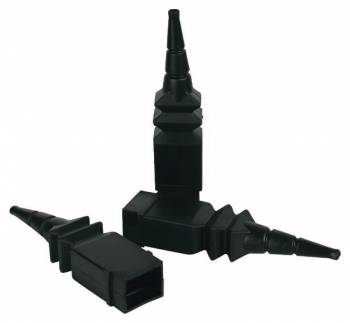
Moeller ASPIFT00CS cable gland NH00 3 pieces
| Lieske Part No. | 2057400 |
|---|---|
| Mfg Part No | 166274 |
| EAN-Code | 4015081627929 |
| Manufacturer | Eaton |
| Here only | 32,10 EUR
38,20 EUR incl. VAT
|
Further information for Moeller ASPIFT00CS cable gland NH00 3 pieces
| General | |
| Manufacturer | Eaton |
| Application | fuse-load disconnector (PIFT) |
| Size | NH00 |
Cable barrier is the central component that secures cables in the area of the connection terminals and simultaneously provides a structural closure for the front of the switching device. The barrier ensures structured and clear wiring, which facilitates maintenance and inspection of the installation. By using cable barriers, the risk of short circuits or mechanical damage to the wiring is also reduced.
Applications primarily include mounting in enclosures, distribution boxes, and other electrical distribution systems where fuse switch disconnectors are installed. The barrier is typically used in electrical installations during the mounting of NH00 switches to protect cable connections and enhance the mechanical stability of the wiring. It is particularly suitable for applications requiring high operational safety and orderly construction of the switching installation.
Functions and equipment in detail include the mechanical guidance and fixation of cables at the rear of the switch. The barrier is inserted into the designated openings of the switch and adapts to the geometry of the connection terminals. It is designed for use with NH00 fuse switch disconnectors, which are typically installed in enclosures with a rated voltage up to 690 V and a rated current up to 1600 A. The barrier itself is made of a robust, electrically insulating material that meets the requirements of industrial electrical installations.
Technology explained simply means that the cable barrier not only performs a mechanical function but also contributes to electrical safety. By covering the cable connections, the contact area between the wires and other components in the enclosure is minimized, reducing the likelihood of sparking or short circuits. The barrier is designed to securely hold the cables without impairing their electrical conductivity or mechanical load capacity.
Compatibility and accessories refer to the use exclusively with fuse switch disconnectors of type PIFT, particularly in NH00 size. The barrier is not intended for other switch types or sizes. Use is exclusively in conjunction with the specified switch type.
Installation and mounting is carried out by simply inserting the barrier into the designated openings at the rear of the fuse switch disconnector. No additional tools or mounting aids are required. The barrier is installed after the switch has been mounted in the enclosure to protect the cable connections. Installation takes place before wiring to ensure safe and orderly cable routing.
Operational advantages include improved safety and maintainability of the electrical installation. The cable barrier reduces the risk of mechanical damage and electrical faults, increasing operational safety. Additionally, it facilitates inspection and maintenance, as the cable structure remains clear. Using the barrier is part of a professional and standard-compliant installation that meets the requirements of electrical engineering.
Note: Batteries or other accessories are not included in the delivery scope.

This is an offer of:
79279 Vörstetten
https://industry-electronics.com
Tel. 07666/88499-0
Fax. 07666/88499-111
Diesen Artikel finden Sie unter:
industry-electronics.com/artikel/2057400

Lieske Elektronik e.K.
Reutener Str. 1079279 Vörstetten
https://industry-electronics.com
Tel. 07666/88499-0
Fax. 07666/88499-111
Diesen Artikel finden Sie unter:
industry-electronics.com/artikel/2057400