
Moeller 082152 L-PKZ0(400V) indicator light white
Industrial Material > Control devices / Pilot devices > Signal devices, optical and acoustic
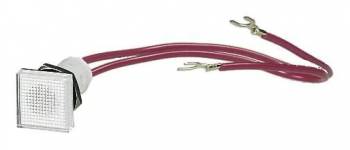
Moeller 082152 L-PKZ0(400V) indicator light white
| Lieske Part No. | 866963 |
|---|---|
| Mfg Part No | 082152 |
| EAN-Code | 4015080821526 |
| Manufacturer | Eaton |
| Here only | 20,51 EUR
24,41 EUR incl. VAT
|
Further information for Moeller 082152 L-PKZ0(400V) indicator light white
| General | |
| Product type | indicator lights |
| Light source | Glow lamp |
| Display colour | White |
| Operating voltage | 400 V |
| Application range | System mounting enclosures for motor protection circuit breakers |
Applications
The indicator light is intended for use in industrial control and switching installations, particularly in combination with motor protection switches from the Eaton product family. It is mounted in system mounting housings to visually display the operating state of the connected motor or switching installation. The white color of the indicator ensures clear visibility in the environment, especially when combined with other colored signals. The device is used in installations requiring visual state indication, for example, in production plants, machine controls, or power supply technology.
Functions and Equipment in Detail
The device operates with a neon lamp serving as the light source. Neon lamps are known for their low power consumption and long service life, making them suitable for continuous indication in industrial environments. The indication is provided in white, enabling clear and unambiguous signaling. The designation L-PKZ0(400V) suggests that the device is designed for an operating voltage of 400 volts, which is common in industrial electrical engineering. Mounting is done directly into the system mounting housing of the motor protection switch, resulting in an integrated and compact solution.
Technology Explained Simply
The neon lamp in the indicator light operates based on a gas discharge principle. When the operating voltage of 400 volts is applied, the gas inside the lamp ionizes and emits light. The white color of the indication is achieved through the specific composition of the gas and the coating of the lamp. The lamp is designed for continuous operation and requires no additional power supply beyond the motor protection switch. Integration into the system mounting housing enables a direct connection to the motor protection switch control, so the indication automatically reflects the switch’s state.
Compatibility and Accessories
The L-PKZ0(400V) indicator light is specifically designed for use in system mounting housings of Eaton motor protection switches. It is not intended as a universal signaling device for other housings or control panels. These housings, for example CI-PKZ01-NA-SVB or CI-PKZ01-SVB, are designed for different protection ratings such as IP40 or IP65 and are used for mounting pushbuttons or other components.
Mounting and Installation
Mounting is done directly into the system mounting housing of the motor protection switch. For this, a precisely fitting hole or recess in the housing is required, designed specifically for integrating the indicator light. The electrical connection is made via the integrated terminal clamps of the motor protection switch, eliminating the need for additional cables or connections. Installation does not require special tools, but a proper connection to the switch control must be ensured to guarantee correct operation of the indicator.
Advantages in Operation
Using the indicator light provides clear and reliable visual indication of the operating state. The neon lamp features a long service life and low energy consumption, reducing operating costs. Integration into the system mounting housing reduces space requirements and simplifies installation. The white color of the indication allows for clear differentiation from other signals, especially in complex control systems. Use in combination with motor protection switches ensures direct feedback on the motor’s condition, simplifying maintenance and diagnostics.

This is an offer of:
79279 Vörstetten
https://industry-electronics.com
Tel. 07666/88499-0
Fax. 07666/88499-111
Diesen Artikel finden Sie unter:
industry-electronics.com/artikel/866963

Lieske Elektronik e.K.
Reutener Str. 1079279 Vörstetten
https://industry-electronics.com
Tel. 07666/88499-0
Fax. 07666/88499-111
Diesen Artikel finden Sie unter:
industry-electronics.com/artikel/866963