
Di-Soric 200299 DCC 12 M 06 PSK-IBSL inductive proximity sensor
Industrial Material > Control devices / Pilot devices > Initiators, inductive / capacitive
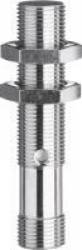
Di-Soric 200299 DCC 12 M 06 PSK-IBSL inductive proximity sensor
| Lieske Part No. | 947849 |
|---|---|
| Mfg Part No | 200299 |
| EAN-Code | 4255686300760 |
| Manufacturer | Di-Soric |
| Here only | 75,88 EUR
90,30 EUR incl. VAT
|
Further information for Di-Soric 200299 DCC 12 M 06 PSK-IBSL inductive proximity sensor
| General | |
| Function principle | Inductive |
| Mounting type | quasi flush |
| Switching distance | 6 mm |
| Operating voltage | 10 . 30 V DC |
| Switching output | pnp, 200 mA, NO |
| Evaluation | Digital |
| Construction type | Thread |
| Housing material | Brass |
| Size | M12 x 1 |
| Length housing | 60 mm |
| Ambient temperature operation | -25 . +70 °C |
| Degree of protection | IP 67 |
| Connection | Connector, M12, 4-pole, A-coded |
Inductive proximity sensor
The sensor uses the inductive principle, in which an electromagnetic field is generated and disturbed by the approach of a metallic object. This disturbance is electronically evaluated and triggers the switching operation. The evaluation is digital, enabling a clear and unambiguous switching response without transition phases. The operating voltage is in the range of 10 to 30 V DC, allowing flexible integration into various control systems. The maximum current consumption is 200 mA, which is sufficient for most industrial applications.
Functions and equipment in detail
The switching output is configured as a PNP transistor and operates in the normal-off mode (NO), switching the output to high potential when an object is detected. This is a common configuration in automation technology. The sensor features a 4-pole M12 connector, A-coded, to ensure a unique plug connection and prevent incorrect connections. The housing type is threaded, with a diameter of M12 and an overall length of 60 mm, enabling standardized mounting.
Technology explained simply
The protection rating IP 67 means the sensor is dust-tight and temporarily waterproof, making it suitable for outdoor use or in humid environments. The operating ambient temperature ranges from -25 °C to +70 °C, allowing use in climatically demanding environments. The housing is made of brass, a material that is both mechanically robust and corrosion-resistant. The combination of material and protection rating ensures a long service life of the sensor under industrial conditions.
Compatibility and accessories
The sensor is designed for use in control systems that support a PNP circuit with 10–30 V DC voltage. The A-coded M12 connector is a standard in automation technology and ensures a secure and reliable connection.
Mounting and installation
Mounting is done via the M12 thread, allowing the sensor to be screwed into corresponding holes or holders. The quasi-flush mounting type enables a flat arrangement on machine parts, reducing the risk of collisions or damage. Installation requires no special tools or additional components, as the sensor connects directly to the control system.
Advantages in operation
The sensor offers high reliability due to the inductive principle and digital evaluation. The extremely high switching distance of 6 mm enables precise detection even at short distances. The IP 67 protection rating and brass housing ensure high mechanical and chemical resistance. The operating voltage of 10–30 V DC allows flexible integration into existing systems. The A-coded M12 connector ensures a secure and error-free connection.

This is an offer of:
79279 Vörstetten
https://industry-electronics.com
Tel. 07666/88499-0
Fax. 07666/88499-111
Diesen Artikel finden Sie unter:
industry-electronics.com/artikel/947849

Lieske Elektronik e.K.
Reutener Str. 1079279 Vörstetten
https://industry-electronics.com
Tel. 07666/88499-0
Fax. 07666/88499-111
Diesen Artikel finden Sie unter:
industry-electronics.com/artikel/947849