
DEHN 478019 earthing point M10 12 V4A
Installation > Grounding Systems > Grounding material
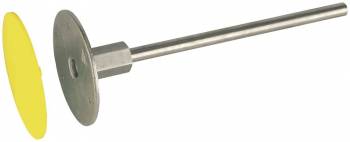
DEHN 478019 earthing point M10 12 V4A
| Lieske Part No. | 118711 |
|---|---|
| Mfg Part No | 478019 |
| EAN-Code | 4013364072107 |
| Manufacturer | DEHN |
| Here only | 49,59 EUR
59,01 EUR incl. VAT
|
Further information for DEHN 478019 earthing point M10 12 V4A
| General | |
| Norm | DIN EN 62561-1 |
| Model | Type M |
| Connecting shaft | 10 mm |
| Connection thread | M10 / M12 |
| Material | V4A, V2A |
| Insert | Formwork |
| Function | Earth potential bonding, functional potential bonding |
| Material of plate | StSt (V4A) |
| Material No. | 1.4571 / 1.4404 / 1.4401 |
| ASTM / AISI | 316Ti / 316L / 316 |
| Material of shaft | StSt |
| Dimensions of connecting shaft (Ø / length) | 10 / 180 mm |
| Minimum lengths of M10 screws | 35 mm (thread length 40 mm) |
| Minimum lengths of M12 screws | 15 mm (thread length 20 mm) |
| Short-circuit current (AC 50 Hz / DC) (1 s; ≤ 300 °C) | 3.9 kA |
| Standard | EN 62561-1 |
Applications
The earthing fixed point is used in construction, particularly during the erection of buildings where reliable earthing and equipotential bonding are required. It is suitable for diverting electrical potentials within the building to ensure the safety of personnel and electrical installations. The fixed point is typically installed in concrete, where it is built into the formwork to be connected later to the reinforcement or other earthing elements. Its application is in areas requiring high corrosion resistance, for example, in damp or aggressive environments.
Functions and Equipment in Detail
The fixed point is designed to provide a durable and conductive connection. The connection shaft with a 10 mm diameter ensures stable mechanical fixation, while the M10/M12 thread enables connection to corresponding screw connections or other earthing elements. The material execution in V4A (stainless steel) and V2A (Nirosta steel) ensures high corrosion resistance, which is particularly important when the fixed point is installed in concrete or other damp environments. The use of stainless steel ensures that the fixed point does not corrode even under long-term exposure to moisture or chemical influences, maintaining its conductivity.
Technology Explained Simply
The earthing fixed point functions as a fixed connection point in the earthing system, installed in concrete. It enables the electrical earthing via the reinforcement or other metallic structures within the building. The connection is made via the M10/M12 thread, creating a mechanically secure and electrically conductive link. The materials V4A and V2A are specifically designed for use in damp or corrosive environments, as they exhibit high resistance to oxidation and chemical attacks. The installation technique involves placing the fixed point in the formwork, so that it is securely anchored in the structure after the concrete has hardened.
Compatibility and Accessories
The earthing fixed point is compatible with standard earthing systems and can be connected to other earthing elements, such as earthing cables or discharges. The connection is made via the M10/M12 thread, providing a wide range of standard connection options. The use of stainless steel (V4A) and Nirosta steel (V2A) enables universal application in various construction areas, especially in environments with increased corrosion risk.
Installation and Mounting
Installation is carried out in the formwork before concreting. The fixed point is positioned so that it remains easily accessible after the concrete has hardened, allowing the electrical connection to be made. The connection shaft with a 10 mm diameter enables secure fixation in the concrete. The connection to the reinforcement or other earthing elements is made via the M10/M12 thread. It is essential to ensure that electrical conductivity between the fixed point and the connected system is maintained, with the use of stainless steel ensuring corrosion resistance and thus long-term functionality.
Operational Advantages
The use of the DEHN earthing fixed point type M provides a reliable and durable solution for equipotential bonding in buildings. The materials V4A and V2A ensure high corrosion resistance, extending the service life of the fixed point and reducing the need for maintenance. The mechanical stability provided by the connection shaft and the M10/M12 thread ensures a secure connection that remains intact even under mechanical stress. The installation technique in the formwork allows for easy integration into the construction process, without requiring additional mounting work after concreting.

This is an offer of:
79279 Vörstetten
https://industry-electronics.com
Tel. 07666/88499-0
Fax. 07666/88499-111
Diesen Artikel finden Sie unter:
industry-electronics.com/artikel/118711

Lieske Elektronik e.K.
Reutener Str. 1079279 Vörstetten
https://industry-electronics.com
Tel. 07666/88499-0
Fax. 07666/88499-111
Diesen Artikel finden Sie unter:
industry-electronics.com/artikel/118711