
DEHN 390050 MVK 8.10 SKM10X30 STTZN MV Terminal St/tZn
Installation > Grounding Systems > Lightning protection material
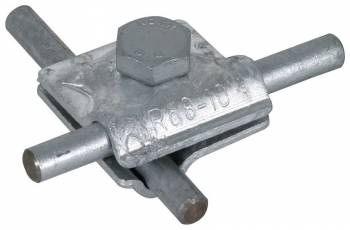
DEHN 390050 MVK 8.10 SKM10X30 STTZN MV Terminal St/tZn
| Lieske Part No. | 189348 |
|---|---|
| Mfg Part No | 390050 |
| EAN-Code | 4013364095991 |
| Manufacturer | DEHN |
| Here only | 4,08 EUR
4,86 EUR incl. VAT
|
Further information for DEHN 390050 MVK 8.10 SKM10X30 STTZN MV Terminal St/tZn
| General | |
| Material of clamp | St/tZn |
| Clamping range Rd | 8-10 mm |
| Material thickness (t1 / t2) | 2.5 mm |
| Screw | d i M10 x 30 mm |
| Material of screw / nut | St/tZn |
| Lightning current carrying capability (10/350 µs) | = / & *) |
| Standard | EN 62561-1 |
| Short-circuit current (AC 50 Hz / DC) (1 s; ≤ 300 °C) | 7.3 kA |
Multi-purpose connection function
The terminal is universally applicable and can be configured as a cross, T, or parallel terminal, depending on the installation requirements. This flexibility enables efficient connection of reinforcement, concrete reinforcement mesh, or foundation conductors with round and flat conductors. The arrangement is either parallel (II) or cross-shaped (+), with the terminal ensuring the required mechanical and electrical connection.
Technology explained clearly
The terminal features a clamping area for round conductors with a diameter range of 8 to 10 mm. The material thickness is 2.5 mm, providing sufficient mechanical strength for the connection. The hexagon screw used has dimensions M10 x 30 mm and enables secure fastening. The lightning current carrying capacity is tested in accordance with DIN EN 62561-1, with the exact values specified in the test certificate. The short-circuit current withstand capability is 7.3 kA for a duration of 1 second and a maximum temperature of 300 °C, ensuring suitability for use in electrical installations with high thermal loads.
Compatibility and accessories
The terminal is specifically designed for use in earthing systems, particularly for connecting foundation conductors with the reinforcement of the foundation slab. According to DIN 18014, the equipotential bonding conductor must be connected to the reinforcement every 2 meters, for which this terminal is suitable. It is part of the product family of connection terminals for reinforcement and can be combined with other components of this series, provided the technical requirements regarding diameter, material thickness, and current carrying capacity are met.
Installation and mounting
Mounting is performed by tightening the hexagon screw, whereby the terminal securely fixes the conductors. The two-part design with thread in the lower part enables easy and secure fastening. The terminal is designed for use in construction, particularly in concrete structures, where a durable and corrosion-resistant connection is required. Mounting typically takes place before or during concreting, with the electrical connection established prior to placing the concrete.
Operational advantages
The terminal provides a reliable electrical and mechanical connection that meets the requirements of lightning protection and earthing technology. The tested lightning current carrying capacity and high short-circuit current withstand capability ensure functionality even under extreme loads. The universal usability as a cross, T, or parallel terminal reduces inventory requirements and simplifies planning and installation. The use of St/tZn ensures sufficient corrosion resistance for outdoor use and in humid environments.
Standards compliance
The terminal complies with DIN EN 62561-1, which defines requirements for lightning protection components for earthing systems. This standard ensures that the terminal possesses the necessary electrical and mechanical properties to be used in lightning protection systems. Testing is carried out under standardized conditions to guarantee the reliability and safety of the component.

This is an offer of:
79279 Vörstetten
https://industry-electronics.com
Tel. 07666/88499-0
Fax. 07666/88499-111
Diesen Artikel finden Sie unter:
industry-electronics.com/artikel/189348

Lieske Elektronik e.K.
Reutener Str. 1079279 Vörstetten
https://industry-electronics.com
Tel. 07666/88499-0
Fax. 07666/88499-111
Diesen Artikel finden Sie unter:
industry-electronics.com/artikel/189348