
DEHN 365419 UEBS 16 L400 CU FK0.7 10 V2A bridging cable 16 mm²
Installation > Grounding Systems > Grounding material
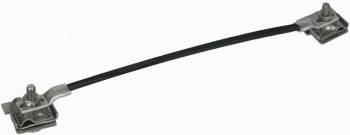
DEHN 365419 UEBS 16 L400 CU FK0.7 10 V2A bridging cable 16 mm²
| Lieske Part No. | 143209 |
|---|---|
| Mfg Part No | 365419 |
| EAN-Code | 4013364128927 |
| Manufacturer | DEHN |
| Here only | 37,62 EUR
44,77 EUR incl. VAT
|
Further information for DEHN 365419 UEBS 16 L400 CU FK0.7 10 V2A bridging cable 16 mm²
| General | |
| Degree of protection | according to DIN EN 62561-1 |
| Cross section | 16 mm² |
| Terminal type | folded terminals |
| Clamping range of saddle | 0.7-10 mm |
| Material of seam clamps | StSt |
| Length | 200 mm |
| Material (cable) | Cu |
| Standard | EN 62561-1 |
Applications
The bonding cable is used in electrical installations where metallic components must be electrically connected to ensure effective equipotential bonding and safe earthing. Typical applications include connecting metal facades, attic segments, roof constructions, or other metallic building elements that need to be integrated into the earthing system via electrical connection. The use without drilling is particularly beneficial when the integrity of the surface or the aesthetic design of the facade must be preserved.
Functions and Equipment in Detail
The cable consists of copper (CU) with a cross-section of 16 mm², ensuring sufficient electrical conductivity and mechanical strength for use in earthing systems. The length is 400 mm, allowing flexible use at various distances between the components to be connected. At both ends, folding clamps (FK0.7) are attached, enabling a secure mechanical and electrical connection. The folding clamps are designed to be inserted into metal claddings without drilling, thus avoiding surface damage.
Technology Explained Simply
The use of folding clamps instead of drilling or screw connections reduces the risk of surface contamination and structural weaknesses. The copper conductor with a 16 mm² cross-section provides sufficient current-carrying capacity to meet the requirements for equipotential bonding. The standard DIN EN 62561-1 specifies that such conductors must have certain electrical and mechanical properties to be safely used in earthing systems. The connection is made by inserting the folding clamps into the metal cladding, creating a firm and durable connection.
Compatibility and Accessories
The bonding cable is designed for connecting metal claddings, particularly in facade and roof construction. It is compatible with attic segments and other metallic components requiring an electrical connection. The folding clamps are designed for secure fastening without drilling, allowing use with various metal profiles, provided the dimensions of the folding clamps (FK0.7) are suitable.
Installation and Mounting
Mounting is done by inserting the folding clamps into the metal claddings, creating a mechanical and electrical connection. No drilling is required, which reduces installation time and protects the surface of the components. The connection must be secure and durable to ensure effective earthing and equipotential bonding. Installation is carried out as part of the electrical installation, with compliance to standards DIN EN 62561-1 and possibly other regulations for earthing systems.
Operational Advantages
The bonding cable provides a reliable and durable electrical connection without drilling, preserving the surface integrity of metal claddings. The use of copper with a 16 mm² cross-section ensures sufficient conductivity, and the folding clamps enable quick and easy installation. Conformity with DIN EN 62561-1 ensures the product meets required technical standards and can be used in professional installations. Avoiding drill shavings reduces the risk of contamination, especially in sensitive areas such as facades or roofs.

This is an offer of:
79279 Vörstetten
https://industry-electronics.com
Tel. 07666/88499-0
Fax. 07666/88499-111
Diesen Artikel finden Sie unter:
industry-electronics.com/artikel/143209

Lieske Elektronik e.K.
Reutener Str. 1079279 Vörstetten
https://industry-electronics.com
Tel. 07666/88499-0
Fax. 07666/88499-111
Diesen Artikel finden Sie unter:
industry-electronics.com/artikel/143209