
Datalogic PBT9600-DKDCRK10EU PERP 2D black blue
Office Equipment > Barcode Scanners > Handheld scanner radio
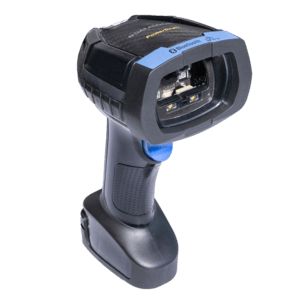
Datalogic PBT9600-DKDCRK10EU PERP 2D black blue
| Lieske Part No. | 423778 |
|---|---|
| Mfg Part No | PBT9600-DKDCRK10EU |
| EAN-Code | |
| Manufacturer | Datalogic |
| Here only | 2.190,70 EUR
2.606,93 EUR incl. VAT
|
Further information for Datalogic PBT9600-DKDCRK10EU PERP 2D black blue
| General | |
| Degree of protection | IP65, IP67 |
| Connection | Bluetooth |
| Interface | USB, RS232 |
| Barcode type | 2D imager |
| RFID frequency | 865–868 MHz |
| Number of keys | 16 |
| Battery capacity | 3350 mAh |
| Battery type | removable battery |
| Colour | black, blue |
| Scope of delivery | USB cable, power supply, power cord (EU), charging/transfer station, battery |
| Document capture | |
Applications
The PBT9600 is designed for use in demanding environments where high mechanical stress, dust, humidity, or temporary water contact may occur. The IP65 and IP67 protection ratings ensure the device is dust-tight and protected against water jets and temporary immersion. This makes the scanner particularly suitable for outdoor use, in production halls, or in the food industry. The integrated RFID function enables contactless identification of objects equipped with UHF transponders, which is advantageous for goods tracking and inventory management.
Functions and Equipment in Detail
The scanner features a 2D imager capable of capturing a wide range of barcode formats, including QR codes, Data Matrix, and PDF417. Document capture enables the digital acquisition of paper documents, supporting process automation in office and logistics environments. The device has 16 keys for controlling applications and navigating user interfaces. The removable battery with a capacity of 3350 mAh ensures sufficient operating time for daily use. The charging and data transfer station allows simultaneous charging and data transfer, making device maintenance more efficient.
Technology Explained Simply
The Bluetooth connection (BT) enables wireless communication with host systems, increasing the user's mobility. The multi-interface (USB and RS232) offers flexibility in integrating into existing systems, either via USB connection or serial interface. The RFID function in the UHF range (865–868 MHz) allows identification of objects at short to medium distances, with the frequency band specified for the European market. The integrated document capture uses the scanner's camera to digitize paper documents, reducing manual data entry.
Compatibility and Accessories
The PBT9600 is supplied with a USB cable, power supply, power cable (EU plug), and a charging/data transfer station. These components enable power supply and data transfer. The combination of Bluetooth and multi-interface ensures broad compatibility with various host systems, including PCs, terminals, and industrial controls. The RFID function is designed for UHF transponders in the 865–868 MHz frequency range, ensuring suitability for European applications.
Installation and Mounting
Installation is carried out using the provided cables and power supply. The charging/data transfer station is connected to a power network and serves for recharging the battery and data transfer. The Bluetooth connection is established via configuration of the host system, with the exact procedure depending on the software used. Physical mounting of the scanner is done by hand, as it is a handheld device.
Operational Advantages
The PBT9600 offers high reliability due to its robust construction and IP65/IP67 protection ratings. The combination of barcode and RFID capture enables efficient data collection in complex processes. Document capture reduces manual input and increases accuracy. The removable battery and charging/data transfer station simplify maintenance and ensure continuous device availability. Support for multiple interfaces (USB, RS232) increases flexibility when integrating into existing systems.

This is an offer of:
79279 Vörstetten
https://industry-electronics.com
Tel. 07666/88499-0
Fax. 07666/88499-111
Diesen Artikel finden Sie unter:
industry-electronics.com/artikel/423778

Lieske Elektronik e.K.
Reutener Str. 1079279 Vörstetten
https://industry-electronics.com
Tel. 07666/88499-0
Fax. 07666/88499-111
Diesen Artikel finden Sie unter:
industry-electronics.com/artikel/423778