
D-Link DMC-G01LC/E Media Converter Gigabit Ethernet
Networks > Media-Converters
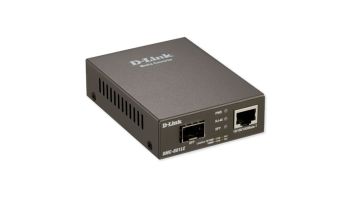
D-Link DMC-G01LC/E Media Converter Gigabit Ethernet
| Lieske Part No. | 1243810 |
|---|---|
| Mfg Part No | DMC-G01LC/E |
| EAN-Code | 0790069415982 |
| Manufacturer | D-Link |
| Here only | 35,93 EUR
42,76 EUR incl. VAT
|
Further information for D-Link DMC-G01LC/E Media Converter Gigabit Ethernet
| Certificates | |
| Safety | LVD, UL/cUL |
| Certification | CE, FCC, VCCI, BSMI |
| Features | |
| Product colour | Grey |
| Internal | |
| LED indicators | |
| Logistics data | |
| Shipping (inner) case length | 50.4 cm |
| Shipping (inner) case width | 29.4 cm |
| Shipping (inner) case height | 23.6 cm |
| Shipping (inner) case net weight | 7.16 kg |
| Products per shipping (inner) case | 20 pc(s) |
| Pallet gross weight (air) | 341.1 kg |
| Master (outer) cases per pallet (air) | 40 pc(s) |
| Products per pallet (air) | 800 pc(s) |
| Pallet gross length | 110 cm |
| Pallet gross width | 120 cm |
| Pallet height (air) | 131 cm |
| Pallet gross weight (sea) | 534.6 kg |
| Master (outer) cases per pallet (sea) | 64 pc(s) |
| Products per pallet (sea) | 1280 pc(s) |
| Pallet height (sea) | 2.02 m |
| Shipping (inner) case gross weight | 8.04 kg |
| Harmonized System (HS) code | 85176990 |
| Network | |
| Maximum data transfer rate | 1000 Mbit/s |
| Networking standards | IEEE 802.3ab, IEEE 802.3u, IEEE 802.3x |
| Ethernet interface type | Gigabit Ethernet |
| Ethernet LAN data rates | 10,100,1000 Mbit/s |
| Auto MDI/MDI-X | |
| Operational conditions | |
| Operating temperature (T-T) | 0 - 50 °C |
| Storage temperature (T-T) | -10 - 70 °C |
| Operating relative humidity (H-H) | 10 - 90% |
| Storage relative humidity (H-H) | 5 - 90% |
| Packaging data | |
| Package width | 101 mm |
| Package depth | 134 mm |
| Package height | 95 mm |
| Package weight | 358 g |
| Performance | |
| Mean time between failures (MTBF) | 506711 h |
| Ports & interfaces | |
| Connectivity technology | Wired |
| Ethernet LAN (RJ-45) ports | 1 |
| Fiber ports quantity | 1 |
| Fiber optic connector | SFP |
| DC-in jack | |
| Power | |
| Input voltage | 230 - 240 V |
| Output voltage | 5 V |
| Output current | 1 A |
| Weight & dimensions | |
| Width | 70 mm |
| Depth | 95 mm |
| Height | 25 mm |
Applications
The converter is used wherever a connection between a copper network (e.g. Cat5e or Cat6) and a fiber optic cable is needed. This is relevant, for example, in building cabling, when connecting outdoor areas, or in industrial environments where fiber optic offers greater range and interference resistance. The maximum cable length depends on the used SFP transceiver and the connected fiber optic cable, with sources not specifying exact range values.
Functions and equipment in detail
The DMC-G01LC/E features an RJ-45 port for copper connection and an SFP port for fiber optic. Ethernet LAN data transfer rates are 10, 100, and 1000 Mbit/s, with a maximum transmission rate of 1000 Mbit/s. Support for Auto MDI/MDI-X enables automatic detection and adaptation of the connection, eliminating the need for additional switching or cable reconfiguration. LED indicators signal operational status and connection, facilitating diagnostics during operation.
Technology explained simply
The device operates according to network standards IEEE 802.3ab, IEEE 802.3u, and IEEE 802.3x, which apply to Gigabit Ethernet and Fast Ethernet. It converts the electrical signal from the copper cable into an optical signal for fiber optic and vice versa. Power supply is via a DC connection with an input voltage of 230–240 V, delivering an output voltage of 5 V at an output current of 1 A. The mean time between failures (MTBF) is 506711 hours, indicating high reliability.
Compatibility and accessories
The converter is equipped with an SFP port, into which various SFP transceivers can be inserted to support different fiber optic cable types (e.g. Single-Mode or Multi-Mode) and ranges. Using SFP transceivers allows flexible adaptation to specific network requirements.
Mounting and installation
The device is not built-in but designed as a standalone unit. It has a compact form factor with dimensions 70 mm (width) × 95 mm (depth) × 25 mm (height) and is gray in color. Installation is done via the RJ-45 port on the copper side and the SFP port on the fiber optic side. Power supply is via the DC connection. Operating temperature ranges from 0 to 50 °C, and relative humidity during operation is 10–90 %, enabling use in indoor environments and under controlled conditions.
Advantages in operation
The converter enables flexible network expansion, especially in situations where the range of copper cables is limited. Using fiber optic provides higher interference resistance and longer transmission distances. Integrated LED indicators and the Auto MDI/MDI-X function reduce installation complexity. The high MTBF time indicates robust and reliable operation, suitable for professional networks. Certifications CE, FCC, VCCI, BSMI, as well as safety standards LVD and UL/cUL, confirm compliance with international standards.

This is an offer of:
79279 Vörstetten
https://industry-electronics.com
Tel. 07666/88499-0
Fax. 07666/88499-111
Diesen Artikel finden Sie unter:
industry-electronics.com/artikel/1243810

Lieske Elektronik e.K.
Reutener Str. 1079279 Vörstetten
https://industry-electronics.com
Tel. 07666/88499-0
Fax. 07666/88499-111
Diesen Artikel finden Sie unter:
industry-electronics.com/artikel/1243810