
Chauvin Arnoux XR42-BA4 pH and Redox Reference Electrode 4 mm Connector
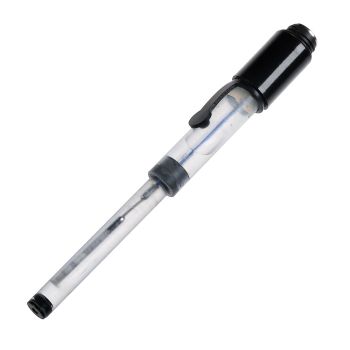
Chauvin Arnoux XR42-BA4 pH and Redox Reference Electrode 4 mm Connector
| Lieske Part No. | 1181399 |
|---|---|
| Mfg Part No | XR42-BA4 |
| EAN-Code | 3663653007207 |
| Manufacturer | Chauvin Arnoux |
| Here only | 236,40 EUR
281,32 EUR incl. VAT
|
Further information for Chauvin Arnoux XR42-BA4 pH and Redox Reference Electrode 4 mm Connector
| General | |
| Refillable | |
Applications
The XR42-BA4 is suitable for measurements in the laboratory and in the field, particularly in applications requiring a stable and long-term constant reference voltage. It is recommended for general pH measurements, with consideration of the use of chloride ions in the reference electrolyte solution (KCl 3 mol/L). The electrode is not suitable for applications where chloride ions react with components of the sample solution, for example with silver ions (Ag⁺), as this may lead to AgCl precipitation. In such cases, a reference electrode based on mercury sulfate is preferable.
Features and Equipment in Detail
The reference electrode is based on the calomel system (Hg/Hg₂Cl₂) and is filled with a saturated potassium chloride solution (3 mol/L). The reference element consists of a drop of mercury and a drop of mercury chloride (calomel) placed on a platinum wire. The PVC body protects the reference element and increases the robustness of the electrode. The ceramic diaphragm ensures controlled diffusion of the electrolyte and prevents direct mixing with the sample solution. The electrode exhibits long-term stability and a low temperature coefficient, ensuring precise and reproducible measurements.
Technology Explained Simply
In pH measurements, the potential difference between the measuring electrode (which reacts to hydronium ions) and the reference electrode (which provides a constant potential) is measured. The measuring device converts this difference into a pH value. The XR42-BA4 serves as a reference point whose potential remains independent of the sample solution. The use of a 4 mm banana plug enables a simple and secure connection to measuring instruments supporting this connector. The electrode is refillable, allowing the electrolyte to be replaced as needed to maintain functionality.
Compatibility and Accessories
The XR42-BA4 is to be used in combination with measuring electrodes such as BV41A/H or XV41. Suitable accessories include the KCL 3 mol/L solution (30 mL) and the Pepsin/HCl solution (125 mL), which are suitable for maintenance and calibration of the electrode. The electrode is designed for use with devices supporting a 4 mm banana plug. The selection of the reference electrode depends on specific test conditions, particularly regarding the chemical composition of the sample solution.
Mounting and Installation
Installation is done by directly connecting the 4 mm banana plug to the measuring instrument. The electrode is immersed in the sample solution, ensuring the ceramic diaphragm comes into contact with the solution. The electrode is not suitable for use in solutions containing Ag⁺ ions, as this may cause a reaction with chloride ions. The operating temperature ranges from 0 to 60 °C. The electrode is refillable, with maintenance and calibration performed using the mentioned accessories.
Advantages in Operation
The XR42-BA4 offers high stability of the reference potential, leading to reproducible measurement results. The PVC body increases mechanical robustness, and the ceramic diaphragm ensures controlled diffusion. Refillability enables extended service life. The use of a 4 mm banana plug ensures universal compatibility with corresponding measuring instruments. The electrode is suitable for laboratory and field use and is particularly suitable for educational purposes, as it illustrates the operating principle of pH measurement.

This is an offer of:
79279 Vörstetten
https://industry-electronics.com
Tel. 07666/88499-0
Fax. 07666/88499-111
Diesen Artikel finden Sie unter:
industry-electronics.com/artikel/1181399

Lieske Elektronik e.K.
Reutener Str. 1079279 Vörstetten
https://industry-electronics.com
Tel. 07666/88499-0
Fax. 07666/88499-111
Diesen Artikel finden Sie unter:
industry-electronics.com/artikel/1181399