
Chauvin Arnoux XPT2-BNC Redox probe with BNC connector
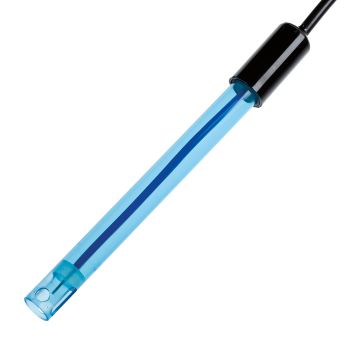
Chauvin Arnoux XPT2-BNC Redox probe with BNC connector
| Lieske Part No. | 1176827 |
|---|---|
| Mfg Part No | XPT2-BNC |
| EAN-Code | 3663653007146 |
| Manufacturer | Chauvin Arnoux |
| Here only | 214,80 EUR
255,61 EUR incl. VAT
|
Further information for Chauvin Arnoux XPT2-BNC Redox probe with BNC connector
The XPT2-BNC from Chauvin Arnoux is a redox indicator electrode specifically developed for measuring the oxidation-reduction potential (ORP) in chemical solutions. It features a platinum rod as the measuring electrode, integrated into a robust PVC housing, and is equipped with a BNC connector to ensure a secure connection to measuring instruments. This electrode serves as an indicator electrode, responding to changes in redox potential, with measurements always performed in combination with a reference electrode to ensure a stable reference potential.
Applications
The electrode is particularly suitable for field applications requiring robust and durable measurement systems. It is recommended for highly oxidizing solutions, especially those containing chlorides, as well as for redox titrations. The use of a separate measuring electrode is also recommended when the lifespan of the measuring electrode is significantly shorter than that of the reference electrode, enabling cost-efficient maintenance.
Functions and Equipment in Detail
The XPT2-BNC consists of a platinum rod serving as an inert metal contact, detecting the electrical reaction in the sample. The PVC housing provides mechanical stability and protects sensitive components from mechanical stress. The BNC connector ensures a reliable electrical connection to measuring instruments and allows for easy installation and removal. The electrode is not designed for pH measurements but exclusively for ORP measurements, quantifying a solution’s ability to accept or donate electrons.
Technology Explained Simply
The redox potential is measured as the difference between the potential of the measuring electrode and the constant potential of the reference electrode in millivolts (mV). The platinum electrode responds to electron activity in the solution, with the measured voltage directly correlating to the oxidizing or reducing strength of the sample. The use of an inert metal such as platinum ensures that the electrode itself does not participate in the chemical reaction but functions solely as a sensor. The PVC casing protects the electrode from mechanical damage and enables a longer service life in operation.
Compatibility and Accessories
The electrode is equipped with a BNC connector compatible with corresponding inputs on measuring instruments. The source does not list any specific accessories or alternatives, so no further compatibility information is available.
Installation and Mounting
Installation is performed by simply inserting the BNC connector into the corresponding socket on the measuring instrument. The electrode is directly immersed into the solution to be measured, ensuring the contact surface of the platinum rod is in contact with the sample. No special mounting aids or tools are required. The electrode is designed for use in laboratory and field environments, with an operating temperature up to 80 °C.
Operational Advantages
The XPT2-BNC offers high robustness due to the PVC housing and the mechanically independent platinum electrode, extending its service life compared to glass-fused electrodes. The BNC connection ensures a secure and repeatable electrical connection. The electrode is specifically designed for oxidizing environments, making it suitable for applications in the chemical industry or water analysis. The separation of measuring and reference electrodes allows for targeted maintenance and replacement of the worn component, reducing operating costs.

This is an offer of:
79279 Vörstetten
https://industry-electronics.com
Tel. 07666/88499-0
Fax. 07666/88499-111
Diesen Artikel finden Sie unter:
industry-electronics.com/artikel/1176827

Lieske Elektronik e.K.
Reutener Str. 1079279 Vörstetten
https://industry-electronics.com
Tel. 07666/88499-0
Fax. 07666/88499-111
Diesen Artikel finden Sie unter:
industry-electronics.com/artikel/1176827