
Chauvin Arnoux BRPT1-BNC redox single-rod probe BNC connector
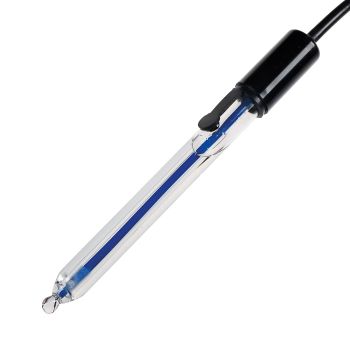
Chauvin Arnoux BRPT1-BNC redox single-rod probe BNC connector
| Lieske Part No. | 1142375 |
|---|---|
| Mfg Part No | BRPT1-BNC |
| EAN-Code | 3663653006026 |
| Manufacturer | Chauvin Arnoux |
| Here only | 301,20 EUR
358,43 EUR incl. VAT
|
Further information for Chauvin Arnoux BRPT1-BNC redox single-rod probe BNC connector
| General | |
| Refillable | |
Applications
The BRPT1-BNC is suitable for applications requiring redox potential measurement, such as in water analysis, the food industry, or chemical process monitoring. The electrode is designed for measurements in liquid media and can be used in both laboratory and field environments. The refillable design enables long-term use, especially in applications where the electrolyte quality may degrade over time.
Features and Equipment in Detail
The electrode operates with a platinum rod as the measuring electrode, which is suitable for redox measurements due to its chemical inertness. The reference electrode is based on the Ag/AgCl system, providing a stable reference potential. The liquid electrolyte KCl 1 mol/l is housed in a refillable enclosure, allowing for maintenance and electrolyte replacement. The diaphragm is made of ceramic, enabling controlled diffusion of the electrolyte. The electrode is equipped with a BNC connector, ensuring a standardized connection to measuring instruments.
Technology Explained Simply
The redox potential (ORP) measures the ability of a solution to accept or donate electrons. The BRPT1-BNC detects this ability by measuring the potential difference between the platinum electrode and the Ag/AgCl reference electrode. The result is displayed in millivolts (mV). The refillable design with KCl 1 mol/l ensures the electrolyte maintains its function over a long period, as the low concentration minimizes crystallization and reduces diaphragm contamination. The glass structure of the electrode body provides chemical resistance against many solutions.
Compatibility and Accessories
The BRPT1-BNC is equipped with a BNC connector, compatible with measuring instruments that support this connection. Accessories such as KCL 1mol/L 30 mL and Pepsin/HCl (125 ml) are available for maintenance and calibration of the electrode. These solutions are used for electrolyte replenishment or cleaning the diaphragm.
Mounting and Installation
The electrode is immersed directly into the liquid to be measured. The BNC connector is connected to the measuring instrument. Refilling of the electrolyte is required during initial setup or after maintenance. The electrode is designed for operating temperatures from 0 to 80 °C, enabling use in a wide range of environments.
Operational Advantages
The refillable design extends the electrode's service life, as the electrolyte can be replaced when needed. The use of KCl 1 mol/l reduces crystallization and diaphragm contamination, resulting in stable and reliable measurements. The glass structure offers high chemical resistance, and the BNC connector ensures a universal connection to compatible devices.

This is an offer of:
79279 Vörstetten
https://industry-electronics.com
Tel. 07666/88499-0
Fax. 07666/88499-111
Diesen Artikel finden Sie unter:
industry-electronics.com/artikel/1142375

Lieske Elektronik e.K.
Reutener Str. 1079279 Vörstetten
https://industry-electronics.com
Tel. 07666/88499-0
Fax. 07666/88499-111
Diesen Artikel finden Sie unter:
industry-electronics.com/artikel/1142375