
Chauvin Arnoux BR41-BA4 pH and Redox Reference Electrode 4 mm-Connector
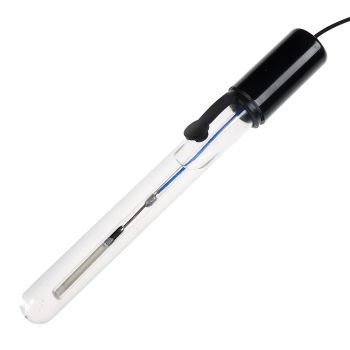
Chauvin Arnoux BR41-BA4 pH and Redox Reference Electrode 4 mm-Connector
| Lieske Part No. | 1142358 |
|---|---|
| Mfg Part No | BR41-BA4 |
| EAN-Code | 3663653005890 |
| Manufacturer | Chauvin Arnoux |
| Here only | 180,00 EUR
214,20 EUR incl. VAT
|
Further information for Chauvin Arnoux BR41-BA4 pH and Redox Reference Electrode 4 mm-Connector
| General | |
| Refillable | |
Applications
The BR41-BA4 is suitable for pH and redox measurements in various application areas, particularly when a separate electrode configuration is required, for example in educational use in teaching or when the measuring electrode and reference electrode have different lifespans. It is used in combination with measuring electrodes such as BV41A/H or XV41. Use at higher temperatures (> 60 °C) is possible, with the ceramic junction acting as a porous diaphragm enabling widespread application even under these conditions.
Functions and Equipment in Detail
The reference electrode operates with an Ag/AgCl reference system, known for its stability and reliability in pH measurements. The reference electrolyte consists of a KCl solution with 1 mol/l, which is refillable. This value offers advantages such as reduced crystallization upon evaporation of the liquid on the membrane and reduced risk of diaphragm contamination, extending the electrode's lifespan. The diaphragm is made of ceramic, ensuring easy use and good chemical resistance. The electrode is equipped with a 4 mm banana plug, intended for connection to suitable measuring instruments.
Technology Explained Simply
The BR41-BA4 provides a constant potential serving as a reference, while the measuring electrode reacts to hydronium ions in the sample. The measuring device detects the potential difference between both electrodes and converts it into a pH value. The use of KCl 1 mol/l as the reference electrolyte minimizes crystal formation on the membrane and reduces the likelihood of diaphragm clogging. The porous ceramic diaphragm allows controlled diffusion of the electrolyte solution, ensuring stable measurement.
Compatibility and Accessories
The electrode is designed for use with measuring electrodes such as BV41A/H or XV41. As accessories, solutions such as KCL 1mol/L (30 mL) and Pepsin/HCl (125 ml) are offered, suitable for maintenance and calibration of the electrode. Compatibility with various connection variants is mentioned in the manufacturer's catalog, with the BR41-BA4 specifically designed for the 4 mm banana plug.
Mounting and Installation
Installation is done by directly connecting the 4 mm banana plug to the corresponding connection on the measuring device. The electrode is immersed in the solution to be measured, ensuring the ceramic junction is in contact with the sample. The electrode is designed for use in laboratory and field environments, with an operating temperature range of 0 to 80 °C to be considered.
Operational Advantages
The use of KCl 1 mol/l as the reference electrolyte ensures low crystallization and reduces the risk of diaphragm contamination, extending the electrode's lifespan. The ceramic junction allows for easy handling and is suitable for measurements at higher temperatures. The electrode is refillable, enabling maintenance and restoration of functionality over a long period. The combination with separate electrodes allows for consideration of different component lifespans and optimization of measurement accuracy.

This is an offer of:
79279 Vörstetten
https://industry-electronics.com
Tel. 07666/88499-0
Fax. 07666/88499-111
Diesen Artikel finden Sie unter:
industry-electronics.com/artikel/1142358

Lieske Elektronik e.K.
Reutener Str. 1079279 Vörstetten
https://industry-electronics.com
Tel. 07666/88499-0
Fax. 07666/88499-111
Diesen Artikel finden Sie unter:
industry-electronics.com/artikel/1142358