
Busch Jaeger 2CKA006220A0498 Toggle 1f black matte
Installation > Home Automation > EIB material
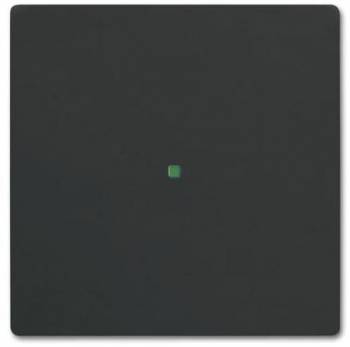
Busch Jaeger 2CKA006220A0498 Toggle 1f black matte
| Lieske Part No. | 553211 |
|---|---|
| Mfg Part No | 2CKA006220A0498 |
| EAN-Code | 4011395203286 |
| Manufacturer | Busch Jaeger |
| Here only | 9,23 EUR
10,98 EUR incl. VAT
|
Further information for Busch Jaeger 2CKA006220A0498 Toggle 1f black matte
| General | |
| Other bus systems | Other |
| Material | Plastic |
| Material quality | Thermoplastic |
| Surface protection | Lacquered |
| Surface finishing | Matt |
| Colour | Black |
| RAL-number (akin) | 9005 |
| Number of actuation points | 1 |
| Number of buttons | 1 |
| Bus system KNX | |
| Bus system KNX radio | |
| Bus system radio frequent | |
| Bus system LON | |
| Bus system Powernet | |
| Radio frequent bidirectional | |
| Transparent | |
| Bus connection included | |
| With label area | |
Cover for sensor units
The toggle switch is primarily intended as a cover for sensor units in the Busch-free@home® system. It conceals the electronic modules installed in the wall and simultaneously provides an operable actuation point. The cover is designed for a single function, with the number of actuation points and buttons each being 1. The surface is matte lacquered and made of thermoplastic, ensuring a robust and uniform appearance. The black colour corresponds to RAL number 9005, enabling clear alignment with colour standards.
Functions and equipment in detail
The toggle switch features a bus connection, enabling communication with the installed electronic modules. The functionality is bidirectional, meaning signals can be transmitted both into and out of the installation. This is particularly important for systems requiring feedback or status indicators. The toggle switch is not transparent and does not include a labelling field, so operation is exclusively mechanical. The surface is lacquered and matte, creating a modern, understated appearance.
Technology explained clearly
The toggle switch is not an independent control device but serves as a mechanical cover and operating element for installed modules. The electronic logic is handled by the installed sensors or actuators in the Busch-free@home® system. The toggle switch itself only performs mechanical actuation and optical integration into the wall installation. The use of thermoplastic as the material ensures high mechanical stability and weather resistance, especially in indoor environments. The matte surface reduces reflections and blends visually into modern interior designs.
Compatibility and accessories
The toggle switch is compatible with various frames and covers available in the future® linear, Busch-axcent®, and Platform 63 design lines. Suitable accessories include, for example, the 1-way solo chrome matte frame, the 2-way Busch-axcent studiowhite cover frame, the 3-way future linear black matte frame, and other variants in different colours and designs. These frames enable modular and aesthetically uniform installations. The toggle switch is also combinable with other products from the Busch-free@home® wireless and Busch-free@home® wired ranges, with the exact functionality depending on the installed modules.
Installation and mounting
Mounting is carried out in standard wall installations, with the toggle switch inserted into the pre-cut opening of the wall frame. Installation requires no additional tools or components, as the toggle switch is directly placed onto the installed electronics. The connection is made via the integrated bus connection, ensuring secure and reliable signal transmission. The toggle switch is designed for single mounting and integrates into existing installations of the specified design lines.
Advantages in operation
The toggle switch provides a clear and uniform operating surface that integrates visually into the environment. The bidirectional functionality allows feedback to the user, for example through status indicators or feedback upon actuation. The use of thermoplastic ensures long service life and resistance to mechanical stress. The matte surface reduces reflections and contributes to an attractive appearance. Compatibility with various frames and design lines enables flexible and modular installation, adaptable to different architectural and design requirements.

This is an offer of:
79279 Vörstetten
https://industry-electronics.com
Tel. 07666/88499-0
Fax. 07666/88499-111
Diesen Artikel finden Sie unter:
industry-electronics.com/artikel/553211

Lieske Elektronik e.K.
Reutener Str. 1079279 Vörstetten
https://industry-electronics.com
Tel. 07666/88499-0
Fax. 07666/88499-111
Diesen Artikel finden Sie unter:
industry-electronics.com/artikel/553211