
Bernstein 6503435959 KIB-M30A?/010-LSD inductive proximity sensor metal
Installation > Fixing hardware > Clamps
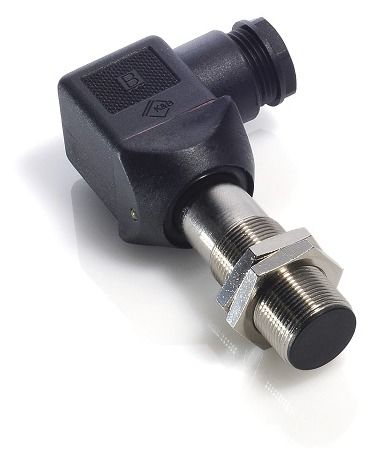
Bernstein 6503435959 KIB-M30A?/010-LSD inductive proximity sensor metal
| Lieske Part No. | 265029 |
|---|---|
| Mfg Part No | 6503435959 |
| EAN-Code | 4024337006999 |
| Manufacturer | Bernstein |
| Here only | 123,12 EUR
146,51 EUR incl. VAT
|
Further information for Bernstein 6503435959 KIB-M30A?/010-LSD inductive proximity sensor metal
| General | |
| Output logic | NPN |
| Norm | DIN EN 60947-5-2 |
| Material detection | metallic, electrically conductive |
Applications
The KIB-M30A?/010-LSD is suitable for use in the manufacturing industry, automation technology, and machine building applications. It is frequently used in systems where continuous monitoring of the position of moving parts is necessary, such as conveyor belts, tool changers, or robotic systems. The contactless operation prevents wear and enables a high service life of the sensor. The robust design also makes it suitable for demanding environments where mechanical stress or vibrations occur.
Functions and Equipment in Detail
The sensor operates inductively, meaning it generates an electromagnetic field that is disturbed by the approach of a metallic object. This disturbance is detected and evaluated as a signal, enabling the sensor to report the state presence" or "absence of the object. Detection occurs without physical contact, which increases service life and reduces maintenance. The sensor unit is designed for use with metallic, electrically conductive materials, with detection accuracy depending on the material type and shape of the object.
Technology Explained Simply
The operation is based on the principle of induction: a high-frequency generator in the sensor creates an electromagnetic field. When a metallic object approaches the sensor, this field is disturbed, inducing a voltage in the receiving coil. This voltage change is electronically evaluated and results in the output of a switching signal. The output logic is designed for use in control systems, with the exact output type (e.g., NPN or PNP) specified in the technical data. The operating voltage and switching frequency are designed to allow the sensor to operate in typical industrial networks.
Compatibility and Accessories
The sensor is designed for integration into existing control systems and can be connected to standard control devices such as PLCs or SPS systems. Connection is made via the designated terminal clamps, designed for use with standard cables. Mounting is typically done using fastening screws or mounting brackets, which must be selected according to the application.
Mounting and Installation
The sensor is mounted at a suitable location that ensures the required distance to the object to be detected. The exact detection distance is specified in the technical data. Mounting is done using screws or mounting brackets, with the mounting surface required to be flat and clean to ensure stable positioning. Electrical connection is made via the terminal clamps, designed for use with standard cables. The polarity of the connections must be observed according to the technical documentation to ensure correct operation.
Advantages in Operation
The use of the KIB-M30A?/010-LSD offers high reliability due to contactless detection, minimizing wear and maintenance. The robust construction enables a long service life even under industrial conditions. Integration into existing control systems is simple, as interfaces are standardized. The precise position detection and ability to monitor rotational speeds make the sensor a valuable component in automated production processes. Compliance with the DIN EN 60947-5-2 standard ensures safety and functionality during operation.

This is an offer of:
79279 Vörstetten
https://industry-electronics.com
Tel. 07666/88499-0
Fax. 07666/88499-111
Diesen Artikel finden Sie unter:
industry-electronics.com/artikel/265029

Lieske Elektronik e.K.
Reutener Str. 1079279 Vörstetten
https://industry-electronics.com
Tel. 07666/88499-0
Fax. 07666/88499-111
Diesen Artikel finden Sie unter:
industry-electronics.com/artikel/265029