
Bernstein 6503407240 KIB-M30A?/010-L2 proximity switch
Industrial Material > Control devices / Pilot devices > Initiators, inductive / capacitive
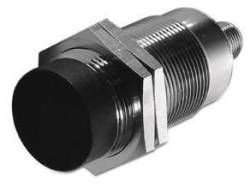
Bernstein 6503407240 KIB-M30A?/010-L2 proximity switch
| Lieske Part No. | 163286 |
|---|---|
| Mfg Part No | 6503407240 |
| EAN-Code | 4024337018268 |
| Manufacturer | Bernstein |
| Here only | 113,81 EUR
135,43 EUR incl. VAT
|
Further information for Bernstein 6503407240 KIB-M30A?/010-L2 proximity switch
| General | |
| Switching function | NPN |
| Norm | DIN EN 60947-5-2 |
Applications
This proximity switch is suitable for industrial applications where precise and reliable detection of metallic objects is required. Typical applications include monitoring machine movements, positioning tools or components, and measuring rotational speeds in drive systems. Due to its robust design, it is suitable for use in production plants, manufacturing lines, and automation systems.
Functions and Equipment in Detail
The switch operates inductively, enabling it to detect metallic, electrically conductive objects in the sensing field without physical contact. Detection occurs without mechanical contact, which extends the device's service life and reduces maintenance. The sensors are designed for a wide range of industrial requirements and offer high reliability in signal transmission.
Technology Explained Simply
Inductive proximity switches use electromagnetic fields to detect metallic objects. When a conductive metal enters the sensing field, the electromagnetic field changes, triggering the switch to output a signal. This technology enables fast and precise response without mechanical wear. Compliance with DIN EN 60947-5-2 ensures that the device meets the requirements for electrical equipment in industrial applications.
Compatibility and Accessories
The switch is designed for use in industrial control systems and can be integrated into existing automation architectures. It is equipped with standard connectors, enabling easy wiring. Exact compatibility with specific controllers or connection modules is detailed in the manufacturer's technical documentation.
Mounting and Installation
Mounting is carried out in the usual manner for industrial sensors, for example by attaching to a machine component or within an enclosure. Positioning must ensure that the sensing field reliably detects the target object. Wiring is done via the designated terminals, with electrical connection data conforming to technical specifications.
Operational Advantages
Using this inductive proximity switch offers advantages such as a long service life due to contactless operation, reliable signal transmission, and easy integration into existing systems. Its robust construction allows use in demanding industrial environments, minimizing downtime.

This is an offer of:
79279 Vörstetten
https://industry-electronics.com
Tel. 07666/88499-0
Fax. 07666/88499-111
Diesen Artikel finden Sie unter:
industry-electronics.com/artikel/163286

Lieske Elektronik e.K.
Reutener Str. 1079279 Vörstetten
https://industry-electronics.com
Tel. 07666/88499-0
Fax. 07666/88499-111
Diesen Artikel finden Sie unter:
industry-electronics.com/artikel/163286