
Beha 5347993 test adapter for EV charging Type 2
Measurement > Other Measuring Devices
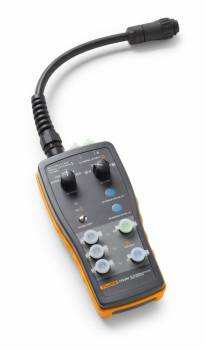
Beha 5347993 test adapter for EV charging Type 2
| Lieske Part No. | 2023550 |
|---|---|
| Mfg Part No | 5347993 |
| EAN-Code | 0195112042908 |
| Manufacturer | Beha |
| Here only | 1.141,90 EUR
1.358,86 EUR incl. VAT
|
Further information for Beha 5347993 test adapter for EV charging Type 2
| General | |
| Application | Test adapter for AC charging stations |
| Charging mode | 3 |
| Connector types | 1 and 2 |
| Tests | earth fault, insulation, voltage, load cycle |
| Compatibility | AC charging stations with charging mode 3 |
Applications
The FLK-FEV300/TY1 & TY2 is designed for use with AC charging stations operating in charging mode 3. It supports plug types 1 and 2, making it suitable for a wide range of charging points in Europe and other regions. The application is primarily in the field of electromobility, where the reliability and safety of charging infrastructure are of critical importance. The adapter is used by professionals in the electrical trade, installers, and maintenance technicians to verify the correct function of charging stations.
Functions and equipment in detail
The test adapter enables the performance of various tests, including earth fault testing, insulation testing of conductors, voltage measurements, and load cycle tests. These tests are used to determine the maximum available charging power of the station. The simulation of an electric vehicle is carried out via integrated interfaces that mimic communication with the charging station. This allows the entire functional chain — from vehicle detection to power supply — to be tested. All tests are performed in a single device, increasing the efficiency of maintenance and installation work.
Technology explained simply
The adapter operates as a passive test body that simulates the electrical and communicative signals of an electric vehicle. It is not capable of consuming power itself, but serves as a load simulator that prompts the charging station to start the charging process and perform the necessary safety checks. Communication takes place via the standard interfaces of the charging cables, designed for charging mode 3. Insulation and grounding testing is performed via integrated contacts connected to the corresponding measuring instruments. Load cycle tests simulate a realistic charging process to check the stability of the station under load.
Compatibility and accessories
The FLK-FEV300/TY1 & TY2 is designed for AC charging stations with charging mode 3 and supports plug types 1 and 2. It is therefore compatible with common charging infrastructures in Europe and other markets that use these standards. Use requires combination with external measuring instruments, such as an installation multifunction tester, a digital multimeter, or an oscilloscope.
Installation and mounting
Installation of the test adapter is carried out by simply plugging it into the charging socket of the charging station. No additional mounting or fastening is required. Connection to the measuring instruments is made via the appropriate connectors on the adapter, designed for carrying out the tests. Operation is performed according to the instructions of the used measuring instruments, as the adapter itself does not have an operating interface or display.
Advantages in operation
The use of the FLK-FEV300/TY1 & TY2 enables comprehensive testing of charging stations in a short time. Combining various tests in a single device reduces the required equipment and accelerates the testing process. The simulation of an electric vehicle enables realistic testing of communication and safety functions. The results of the tests provide important information on the functionality and safety of the charging infrastructure, which is particularly beneficial during maintenance and troubleshooting.
Note: Batteries are not included in the delivery scope.

This is an offer of:
79279 Vörstetten
https://industry-electronics.com
Tel. 07666/88499-0
Fax. 07666/88499-111
Diesen Artikel finden Sie unter:
industry-electronics.com/artikel/2023550

Lieske Elektronik e.K.
Reutener Str. 1079279 Vörstetten
https://industry-electronics.com
Tel. 07666/88499-0
Fax. 07666/88499-111
Diesen Artikel finden Sie unter:
industry-electronics.com/artikel/2023550