
Beha 1288229 80PK-9 sensor type K
Measurement > Other Measuring Devices
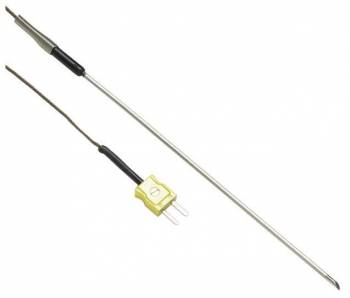
Beha 1288229 80PK-9 sensor type K
| Lieske Part No. | 262099 |
|---|---|
| Mfg Part No | 1288229 |
| EAN-Code | 0095969078474 |
| Manufacturer | Beha |
| Here only | 111,15 EUR
132,27 EUR incl. VAT
|
Further information for Beha 1288229 80PK-9 sensor type K
| General | |
| Thermocouple type | K |
| Temperature range | -40 to 260 °C |
| Application | surfaces, air, non-corrosive gases |
Thermocouple Type K
This sensor is based on thermocouple technology type K, consisting of the metals nickel-chromium and nickel-aluminium. This combination enables stable and reproducible voltage generation depending on the temperature difference between the measurement point and the reference point. Type K is one of the most commonly used thermocouple types in industry due to its wide temperature range and robustness against mechanical stress.
Applications
The 80PK-9 is suitable for measuring temperatures in air, on solid surfaces, and in non-corrosive gases. It is used, for example, in monitoring heating and cooling systems, in process industry, or in the maintenance of electrical installations. The application is intended for environments where no aggressive chemicals or corrosive gases are present that could damage the thermocouple.
Temperature range
The sensor is designed for an operating temperature range of -40 to 260 °C. This range covers a wide variety of industrial and technical applications, from refrigeration systems to heating systems and machine monitoring. The lower limit of -40 °C allows use even in cold-intensive processes, while the upper limit of 260 °C is sufficient for many thermal processes.
Functions and equipment in detail
The 80PK-9 features a compact design, enabling easy handling and installation. The construction allows the sensor to be placed directly on the surface to be measured or inserted into the air. The measurement point is positioned to react quickly to temperature changes, ensuring timely and precise measurement. Connection is made via a cable, which is connected to a suitable measuring device to display or record the measured temperature.
Technology explained simply
A type K thermocouple operates based on the Seebeck effect: when two different metals are joined at one end and there is a temperature difference at this point, an electrical voltage is generated. This voltage is proportional to the temperature difference between the measurement point and the reference point. The 80PK-9 uses this physical property to convert the temperature at the measurement point into an electrical signal that can be evaluated by a measuring device. The accuracy of the measurement result depends on the quality of the materials and the construction of the sensor.
Compatibility and accessories
The sensor is designed for use with measuring devices that have an input for type K thermocouples. It can be combined with various measuring devices used in industrial measurement technology, such as digital multimeters, data loggers, or process measuring instruments. Exact compatibility depends on the connection options and required signal formats of the respective device.
Installation and mounting
Mounting of the 80PK-9 depends on the application. For surface measurements, the sensor is placed directly on the surface to be measured, ensuring good thermal contact. For air measurements, the sensor is placed in the airflow, requiring sufficient air flow and a stable position. Installation does not require special tools, as the sensor is directly connected to the measuring device. Connection is made via the integrated cable, which is connected to the appropriate input of the measuring device.
Advantages in operation
The 80PK-9 offers high measurement accuracy and fast response time, making it suitable for applications with dynamic temperature profiles. Its robust construction enables long service life and reliable performance under industrial conditions. The simple handling and universal applicability in various media make the sensor a versatile tool in industrial measurement technology. The widespread use of type K thermocouples increases spare part availability and compatibility options.

This is an offer of:
79279 Vörstetten
https://industry-electronics.com
Tel. 07666/88499-0
Fax. 07666/88499-111
Diesen Artikel finden Sie unter:
industry-electronics.com/artikel/262099

Lieske Elektronik e.K.
Reutener Str. 1079279 Vörstetten
https://industry-electronics.com
Tel. 07666/88499-0
Fax. 07666/88499-111
Diesen Artikel finden Sie unter:
industry-electronics.com/artikel/262099