
Balluff BES01RN inductive sensor BES Q05AC-PSC15B-EP02
Industrial Material > Control devices / Pilot devices > Initiators, inductive / capacitive
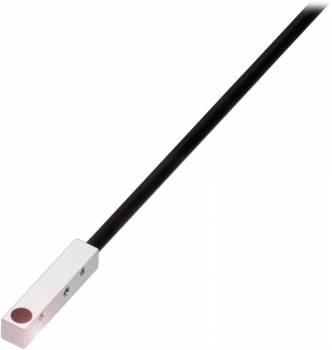
Balluff BES01RN inductive sensor BES Q05AC-PSC15B-EP02
| Lieske Part No. | 459354 |
|---|---|
| Mfg Part No | BES01RN |
| EAN-Code | |
| Manufacturer | Balluff |
| Here only | 113,92 EUR
135,56 EUR incl. VAT
|
Further information for Balluff BES01RN inductive sensor BES Q05AC-PSC15B-EP02
| General | |
| Construction type | 5x5 |
| Built-in | Concise |
| Transmission range | 1.5 mm |
| Switching output | PNP normally open contact (NO) |
| Switching frequency | 2000 Hz |
| Housing material | stainless steel (1.4305) |
| Active area, material | PBT |
| Connection | cable, 2.00 m, PUR |
| Operating voltage Ub | 10...30 VDC |
| Ambient temperature | -25...70 °C |
| Degree of protection | IP67 |
| Approval/conformity | cULus, CE, EAC, WEEE |
Applications
The sensor is designed for industrial applications, particularly in manufacturing automation, the packaging industry or material flow control. It is suitable for detecting metal parts, tools, semi-finished products or moving machine components. The short sensing range of 1.5 mm makes it especially suitable for precise positioning or monitoring small metal components. The operating voltage of 10 to 30 VDC allows flexible integration into existing control systems.
Functions and features in detail
The sensor operates contactlessly and inductively, thus avoiding any mechanical wear. The switching frequency is 2000 Hz, ensuring a rapid response to moving objects. The switching output is configured as PNP switch (NO), meaning that the output closes when an object is detected, enabling signal flow. The active surface is made of PBT, a thermoplastic material known for its mechanical strength and chemical resistance. The housing is made of stainless steel (1.4305), providing high corrosion resistance and mechanical stability.
Technology explained simply
The inductive operating principle is based on the principle of electromagnetic induction: an alternating field is generated in the sensor, which is disturbed when a metallic object approaches. This disturbance is detected and evaluated as a signal. The protection rating IP67 ensures that the sensor is protected against dust and temporary immersion in water, making it suitable for harsh industrial environments. The operating temperature range of -25 to +70 °C allows use in environments with varying climatic conditions, for example in cooling systems or warm production halls.
Compatibility and accessories
The sensor is equipped with a cable connection that is 2.00 m long and made of PUR material. PUR cables are known for their mechanical strength and resistance to oils, fats and chemical influences. Compatibility with standard controls and PLC systems is ensured by the PNP switching configuration and the operating voltage of 10 to 30 VDC. The certifications cULus, CE, EAC, WEEE confirm compliance with European and international safety and environmental standards.
Mounting and installation
The sensor is mounted flush, with dimensions 25 x 5 x 5 mm enabling precise fit into pre-drilled holes or mounting surfaces. Mounting is typically done via screw fastening or into pre-drilled mounting holes. The cable can be connected directly to the control system, with the length of 2.00 m allowing flexible positioning. Installation requires no special tools or additional components.
Advantages in operation
The sensor offers a long service life due to its wear-free inductive operation. The robust stainless steel construction and IP67 protection rating increase operational safety in demanding environments. The short sensing range of 1.5 mm enables precise position detection, while the switching frequency of 2000 Hz ensures a rapid response to dynamic processes. Reliability and ease of maintenance make it an economical solution for industrial applications.

This is an offer of:
79279 Vörstetten
https://industry-electronics.com
Tel. 07666/88499-0
Fax. 07666/88499-111
Diesen Artikel finden Sie unter:
industry-electronics.com/artikel/459354

Lieske Elektronik e.K.
Reutener Str. 1079279 Vörstetten
https://industry-electronics.com
Tel. 07666/88499-0
Fax. 07666/88499-111
Diesen Artikel finden Sie unter:
industry-electronics.com/artikel/459354