
AMD 100-000000081 CHIP EPYC ROME 8-CORE 7232P 3.2 GHz
Computer-Components > Processors > Socket SP3
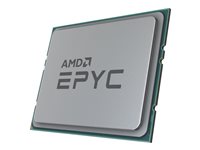
AMD 100-000000081 CHIP EPYC ROME 8-CORE 7232P 3.2 GHz
| Lieske Part No. | 1623342 |
|---|---|
| Mfg Part No | 100-000000081 |
| EAN-Code | 5056489753550 |
| Manufacturer | AMD |
| Here only | 290,70 EUR
345,93 EUR incl. VAT
|
Further information for AMD 100-000000081 CHIP EPYC ROME 8-CORE 7232P 3.2 GHz
| General | |
| Socket | SP3 |
| Clock frequency | 3,1 GHz |
| Turbo frequency | 3,2 GHz |
| Number of cores | 8 |
| Number of threads | 16 |
| Cache | 32 MB |
| TDP | 120 W |
| Processor type | EPYC 7232P |
| Architecture | Rome |
| Delivery format | Tray |
Applications
The processor is designed for use in server systems, particularly in environments requiring high computational power, parallel processing, and reliability. Typical applications include database servers, virtualization environments, cloud infrastructures, and applications in the field of high-performance computing (HPC). The 8 cores with 16 threads enable simultaneous processing of multiple tasks, which is beneficial for efficiency in server environments.
Features and Specifications in Detail
The processor includes an integrated cache of 32 MB, consisting of L3 cache. This cache is used for fast storage of frequently accessed data and instructions, reducing access times and improving overall performance. The 8 cores enable parallel processing of tasks, with each core capable of handling up to two threads simultaneously (Hyper-Threading technology). The combination of high core count and turbo function ensures flexible performance adaptation to varying workloads.
Technology Explained Simply
The technology of the EPYC 7232P is based on the Rome architecture, developed by AMD for the server market. The 8 cores operate independently and can each process two threads in parallel, enabling a total of 16 threads. The turbo function temporarily increases the clock frequency under light load to provide additional performance when needed. The TDP of 120 watts measures the maximum heat output generated under full load and serves as a guideline for selecting appropriate cooling. The SP3 socket is a standard for AMD server processors and requires a compatible motherboard.
Compatibility and Accessories
The processor is designed for systems with SP3 socket and requires a motherboard that supports this socket. It is part of the EPYC 7000 series and can be used in server platforms supporting the Rome architecture. Typical use is in rack servers, where cooling and enclosure must be appropriately designed to handle the thermal load.
Installation and Mounting
Mounting is performed in a server enclosure with SP3 socket. The processor is inserted into the socket, with alignment ensured by the shape of the processor and socket. After mounting, the processor is connected to a heatsink to ensure effective heat dissipation. Installation requires adherence to manufacturer instructions and the use of appropriate tools to avoid damage.
Operational Advantages
The processor offers a balanced combination of performance, energy efficiency, and reliability. The 8 cores with 16 threads enable high parallel processing, which is advantageous for server applications. The turbo function provides additional performance when needed, while the TDP of 120 watts allows for predictable cooling requirements. Use in server environments with SP3 socket ensures compatibility with existing platforms.

This is an offer of:
79279 Vörstetten
https://industry-electronics.com
Tel. 07666/88499-0
Fax. 07666/88499-111
Diesen Artikel finden Sie unter:
industry-electronics.com/artikel/1623342

Lieske Elektronik e.K.
Reutener Str. 1079279 Vörstetten
https://industry-electronics.com
Tel. 07666/88499-0
Fax. 07666/88499-111
Diesen Artikel finden Sie unter:
industry-electronics.com/artikel/1623342