
AMD 100-000000080 CHIP EPYC ROME 8-Core
Computer-Components > Processors > Socket SP3
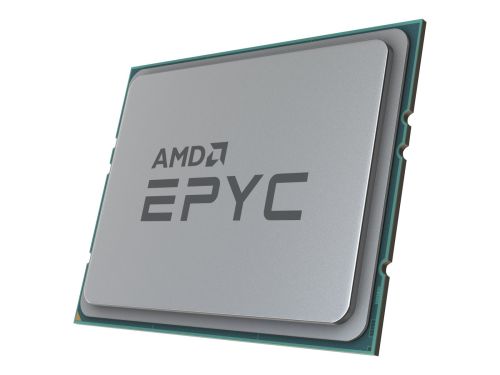
AMD 100-000000080 CHIP EPYC ROME 8-Core
| Lieske Part No. | 1534224 |
|---|---|
| Mfg Part No | 100-000000080 |
| EAN-Code | |
| Manufacturer | AMD |
| Here only | 315,86 EUR
375,87 EUR incl. VAT
|
Further information for AMD 100-000000080 CHIP EPYC ROME 8-Core
| General | |
| Socket | SP3 |
| Number of cores | 8 |
| Number of threads | 16 |
| Clock frequency | 3.1 GHz |
| Turbo frequency | 3.2 GHz |
| TDP | 120 W |
| L3 cache | 64 MB |
| Processor type | EPYC 7252 |
| Architecture | Rome |
| Type of delivery | Tray |
| Product type | Processor |
| Miscellaneous | |
| Packaging | OEM/Tray |
| Processor | |
| Number of cores | 8 cores |
| Number of threads | 16 threads |
| Cache memory | 64 MB |
| Cache memory details | L3 - 64 MB |
| Processor count | 1 |
| Clock frequency | 3.1 GHz |
| Max. turbo clock frequency | 3.2 GHz |
| Compatible socket | Socket SP3 |
| Thermal Design Power (TDP) | 120 W |
| PCI Express revision | 4.0 |
| Number of PCI Express lanes | 128 |
Applications
The AMD EPYC 7252 is primarily designed for use in servers and workstation systems, especially in environments requiring high computational power, parallel processing, and high I/O performance. Typical applications include virtualization, database servers, cloud computing infrastructures, web servers, and scientific computing applications. The architecture is based on the Rome generation, designed for scalable systems supporting multiple processors. Support for SP3 socket enables integration into server platforms optimized for high-performance computing.
Features and Specifications in Detail
The processor features eight physical cores, each supporting two threads (Hyper-Threading), resulting in a total of 16 logical processor cores. This configuration allows for simultaneous execution of multiple tasks and improves efficiency in multi-threaded applications. The integrated 64-MB L3 cache enables fast data retrieval and reduces latency for frequently accessed data. The base clock speed of 3.1 GHz provides stable performance, while the turbo function delivers additional performance at 3.2 GHz under short-term load. The TDP of 120 W requires appropriately sized cooling to avoid thermal stress.
Technical Explanation
The CPU is based on the EPYC Rome architecture, developed for high scalability and performance in server environments. The 8 cores with 16 threads enable efficient parallel processing, particularly beneficial for applications such as virtualization or databases. The 64-MB L3 cache acts as a buffer for frequently used data, reducing access time to main memory. The turbo function dynamically increases clock speed when load demands it and cooling is sufficient. The TDP of 120 W measures maximum heat generation and determines the required cooling. Support for SP3 socket allows use in servers designed for this processor generation.
Compatibility and Accessories
The processor is designed for systems with SP3 socket, commonly used in servers and high-performance computers. It is part of the EPYC Rome family and can be used in platforms supporting multiple processors.
Installation and Mounting
The processor is delivered as a tray version, meaning it is supplied without housing or cooler. Installation requires a compatible motherboard with SP3 socket and adequate cooling capable of dissipating the 120 W TDP. Mounting involves placing the processor into the socket and securing the socket cover. Detailed installation instructions are not included in the delivery, although standard procedures for SP3 sockets are established in the industry.
Operational Advantages
The AMD EPYC 7252 offers a balanced combination of performance, energy efficiency, and scalability. The 8 cores with 16 threads enable high parallel processing, particularly advantageous in virtualized environments or database applications. The 64-MB L3 cache improves access times and reduces latency. The turbo function provides additional performance under short-term load. The TDP of 120 W is typical for server environments and requires appropriate cooling, which is standard in server platforms. Compatibility with SP3 socket enables integration into existing server infrastructures.

This is an offer of:
79279 Vörstetten
https://industry-electronics.com
Tel. 07666/88499-0
Fax. 07666/88499-111
Diesen Artikel finden Sie unter:
industry-electronics.com/artikel/1534224

Lieske Elektronik e.K.
Reutener Str. 1079279 Vörstetten
https://industry-electronics.com
Tel. 07666/88499-0
Fax. 07666/88499-111
Diesen Artikel finden Sie unter:
industry-electronics.com/artikel/1534224