
Allnet RBHutschienenhalter Rail Mount Holder
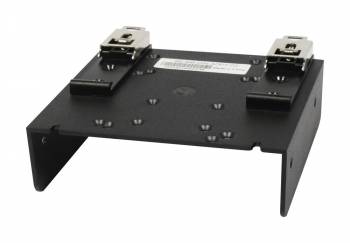
Allnet RBHutschienenhalter Rail Mount Holder
| Lieske Part No. | 1265458 |
|---|---|
| Mfg Part No | RBHutschienenhalter |
| EAN-Code | 4038816174079 |
| Manufacturer | Allnet |
| Here only | 6,50 EUR
7,73 EUR incl. VAT
|
Further information for Allnet RBHutschienenhalter Rail Mount Holder
| General | |
| Compatibility | Raspberry Pi, Rock Pi, other SBC |
| Mounting method | Front mounting |
| Mounting | screw set |
| DIN rail standard | DIN-rail |
Rail mount
The holder is designed for mounting on a 48,3 cm ( 19 inch ) DIN rail, commonly found in standard enclosures and IT racks. The construction allows for secure fixation of the SBC using screws, with the pre-drilled holes ensuring precise alignment and anchoring. Mounting is performed via front mounting, ensuring that access to connectors and sockets on the board is not obstructed. The robust construction supports use in industrial or technical environments.
Applications
The rail mount is suitable for use in industrial control systems, network and monitoring solutions, as well as IT infrastructures where single-board computers are used as small, powerful computers. It is particularly useful in environments where multiple SBCs are to be consolidated within an enclosure to ensure clear structure and easy maintenance. Mounting on a DIN rail enables standardized placement, compatible with other devices.
Functions and equipment in detail
The product features multiple pre-drilled holes, enabling adaptation to various SBC models. The holes are arranged to support mounting of Raspberry Pi models as well as Rock Pi systems. Fixation is achieved using a screw set specifically intended for Rock Pi models (part number 178074). This screw set is part of the mounting process and ensures a secure connection between the holder and the SBC. Front mounting ensures that the board’s connectors remain accessible.
Technology explained simply
A rail mount serves the mechanical fixation of devices onto a DIN rail, commonly used in enclosures and racks. The DIN rail is a standard in electrical engineering, enabling modular mounting of various devices. The Allnet holder utilizes standard DIN rail dimensions and offers flexible adaptation to the different drilling patterns of SBCs through its pre-drilled holes. Mounting is done using screws, which securely fix the device without impairing its function.
Compatibility and accessories
The rail mount is compatible with Raspberry Pi models as well as Rock Pi systems. The variety of pre-drilled holes allows mounting of different SBC models. As an accessory, a screw set (part number 178074) for Rock Pi models is available, intended for secure fixation. Additionally, PoE splitters and 48,3 cm ( 19 inch ) accessories for rail-mounted devices are available in the range, which can be used in combination with the rail mount to complement network and power supply solutions.
Mounting and installation
Mounting is performed by securing the holder to a DIN rail using the provided screws. Subsequently, the SBC module is inserted into the holder and fastened using the screw set. Front mounting ensures that all connectors and sockets on the board remain accessible. Installation requires no additional tools beyond a screwdriver. Positioning typically occurs within an enclosure or server rack, where the DIN rail must already be installed.
Advantages in operation
Using the rail mount provides a structured and secure installation of SBCs in industrial or technical environments. Fixation to a DIN rail enables modular expansion and maintenance. The pre-drilled holes ensure universal adaptation to various SBC models, increasing flexibility. Front mounting ensures access to connectors, simplifying commissioning and maintenance. The robust construction supports use in environments with increased mechanical stress.

This is an offer of:
79279 Vörstetten
https://industry-electronics.com
Tel. 07666/88499-0
Fax. 07666/88499-111
Diesen Artikel finden Sie unter:
industry-electronics.com/artikel/1265458

Lieske Elektronik e.K.
Reutener Str. 1079279 Vörstetten
https://industry-electronics.com
Tel. 07666/88499-0
Fax. 07666/88499-111
Diesen Artikel finden Sie unter:
industry-electronics.com/artikel/1265458