
Allnet ALL3037 Liquid Level Monitor
Networks > Environmental Control
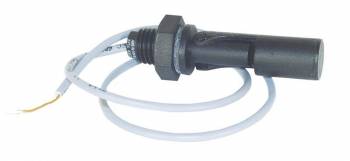
Allnet ALL3037 Liquid Level Monitor
| Lieske Part No. | 334603 |
|---|---|
| Mfg Part No | ALL3037 |
| EAN-Code | 4038816344182 |
| Manufacturer | Allnet |
| Here only | 71,32 EUR
84,87 EUR incl. VAT
|
Further information for Allnet ALL3037 Liquid Level Monitor
| Technical data | |
| Application sites MSR | outdoor |
| Compatibility with central unit | ALL4176 |
| Sensor type | Liquid/level |
| Construction type | wired |
Applications
The sensor is suitable for use in both indoor and outdoor environments, making it applicable for various applications in industrial and commercial building automation. Typical use cases include monitoring oil tanks, water containers, wastewater systems, or heating oil tanks, where early detection of level fluctuations or leaks is crucial. Installation is performed laterally on the tank or container, with the sensor directly immersed in the liquid. The robust polyamide construction ensures high chemical resistance and long service life under various environmental conditions.
Functions and Equipment in Detail
The ALL3037 operates as a threshold switch, triggering a state change when a defined liquid level is reached. The float moves horizontally and flips when the liquid level rises, closing the electrical contact. This state is transmitted to the corresponding MSR central unit via the I2C protocol. Signalization is binary: 0 for low level, 1 for threshold reached. The device is designed for lateral mounting, with the float vertically immersed in the liquid. Connection is made via a 1 m long cable, directly attached to the central unit.
Technology Explained Simply
The sensor uses an I2C interface protocol, enabling serial communication between the sensor and the MSR central unit. I2C is a standard in industrial and building automation, providing simple and reliable data transmission over short distances. The hinged float made of polyamide responds to the liquid column and moves when the threshold is reached. Material selection ensures high resistance to aggressive liquids. The wired design enables a stable connection without wireless interference, which is important for critical monitoring systems.
Compatibility and Accessories
The sensor is compatible with a range of MSR central units from manufacturer Allnet, including models ALL3419, ALL3500, ALL5000v2, ALL4500, ALL3418v2, ALL4176, and others. These central units serve as control and monitoring units for IP-based building automation systems. Various MSR central units are available as accessories, offering different numbers of sensor ports and features such as WLAN or PoE (Power over Ethernet). Combining the sensor with an appropriate central unit enables integration into existing automation networks.
Mounting and Installation
Mounting is performed laterally on the tank or container, with the float vertically immersed in the liquid. Positioning must ensure that the float triggers the threshold when the desired fill level is reached. The 1 m long connection cable is directly connected to the I2C input of the MSR central unit. Installation requires no additional tools or components, as the sensor is delivered as a complete bundle including the I2C input. Wiring is done via the existing network, with the central unit handling communication.
Operational Advantages
The sensor provides a reliable, cost-effective solution for liquid level monitoring. The chemical resistance of the polyamide material ensures long service life, even in aggressive environments. The wired connection guarantees stable signal transmission without sensitivity to electromagnetic interference. Integration into IP-based building automation networks enables centralized monitoring and remote control. The clear binary signalization (0/1) simplifies evaluation and integration into alarm or control logic.

This is an offer of:
79279 Vörstetten
https://industry-electronics.com
Tel. 07666/88499-0
Fax. 07666/88499-111
Diesen Artikel finden Sie unter:
industry-electronics.com/artikel/334603

Lieske Elektronik e.K.
Reutener Str. 1079279 Vörstetten
https://industry-electronics.com
Tel. 07666/88499-0
Fax. 07666/88499-111
Diesen Artikel finden Sie unter:
industry-electronics.com/artikel/334603