
Diverse 2005756 USB isolator STD 1.5 LWL Full Speed with power supply
Medical Technology > Electrical Insulation
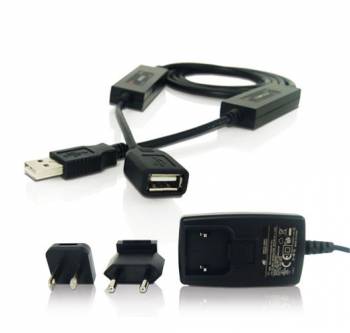
Diverse 2005756 USB isolator STD 1.5 LWL Full Speed with power supply
| Lieske Part No. | 585801 |
|---|---|
| Mfg Part No | 2005756 |
| EAN-Code | |
| Manufacturer | Diverse |
| Here only | 215,66 EUR
256,63 EUR incl. VAT
|
Further information for Diverse 2005756 USB isolator STD 1.5 LWL Full Speed with power supply
| General | |
| Data throughput | 12 Mbit/s |
| USB standard | USB 1.1 (Full Speed) |
| Cable length | 1,5 m |
| Maximum transmission distance | 45 m |
| Current supply | 5 V |
| Certificates | CE, EN 61000-3-2, EN 61000-3-3, EN 55022 |
| Scope of delivery | Standard power adapter |
Applications
The USB Isolator STD 1.5 LWL is primarily designed for use in medical facilities where connecting medical devices via USB interfaces to computers is necessary. The galvanic isolation protects against dangerous electrical feedback that can arise from different grounding potentials. Additionally, the device is suitable for industrial applications where secure data transmission over longer distances with simultaneous electrical isolation is required. The maximum transmission distance is 45 meters, with the cable length of the device itself being 1.5 meters and the total length including the power adapter amounting to 1.74 meters.
Functions and Equipment in Detail
The device operates with USB 1.1 (Full Speed) and supports a maximum data rate of 12 MBit/s. It is compatible with USB 2.0 systems, although the speed is limited to the USB 1.1 specification. The connection is made via a Type A plug at the computer and a Type A socket at the connected device. The primary unit (connected to the computer) is powered through the computer's USB port, eliminating the need for additional power supply for this part. The secondary unit (connected to the device) is powered by a standard power adapter included in the delivery, providing 5 volts. An optional medical power adapter is available, certified for use in medical facilities.
Technology Explained Simply
Galvanic isolation is achieved by converting electrical USB signals into light signals, which are transmitted over a fiber optic cable. This method eliminates any electrical connection between the two devices, thereby avoiding voltage differences that could cause interference or hazards. The light signals are converted back into electrical USB signals at the other end, making the data transmission transparent to the user. The use of fiber optic enables high immunity to interference and a transmission distance of up to 45 meters without degrading signal quality.
Compatibility and Accessories
The USB Isolator STD 1.5 LWL is compatible with USB 1.1 and USB 2.0 systems. The connection is made via standard USB connectors (Type A) at the computer and a socket (Type A) at the device. The device is designed for use with standard USB devices. An optional medical power adapter is available, certified for use in medical facilities. This can be used as a replacement for the standard power adapter included in the delivery when higher safety requirements apply.
Installation and Mounting
Installation is performed by simply connecting the USB isolator between the computer and the connected device. The primary unit (at the computer) is powered via the USB port, while the secondary unit (at the device) is powered by the standard power adapter included in the delivery, providing 5 volts. The fiber optic cable connection is made by plugging the cable ends into the corresponding sockets. The total connection length is 1.74 meters, with the fiber optic cable itself being 1.5 meters long.
Operational Advantages
Galvanic isolation protects against electrical interference and potential hazards caused by voltage differences, especially in medical applications. The use of fiber optic enables high immunity to interference and a transmission distance of up to 45 meters. Compatibility with USB 2.0 systems ensures use in modern computers, although the speed is limited to USB 1.1. Certification according to EN 61000-3-2, EN 61000-3-3, and EN 55022, along with CE marking, confirms compliance with relevant standards for electromagnetic compatibility and safety.
Certification and Standards
The device is equipped with CE, EN 61000-3-2, EN 61000-3-3, and EN 55022 certifications. These standards relate to electromagnetic compatibility (EMC) and the safety of electrical devices. EN 61000-3-2 and EN 61000-3-3 concern power supply and electromagnetic compatibility, while EN 55022 regulates emissions from electrical devices. The CE marking confirms compliance with applicable European laws and standards.

This is an offer of:
79279 Vörstetten
https://industry-electronics.com
Tel. 07666/88499-0
Fax. 07666/88499-111
Diesen Artikel finden Sie unter:
industry-electronics.com/artikel/585801

Lieske Elektronik e.K.
Reutener Str. 1079279 Vörstetten
https://industry-electronics.com
Tel. 07666/88499-0
Fax. 07666/88499-111
Diesen Artikel finden Sie unter:
industry-electronics.com/artikel/585801